
Last updated September 23, 2026
Whole-system duct and dryer vent check with before-and-after photos - you see exactly what came out of your vents
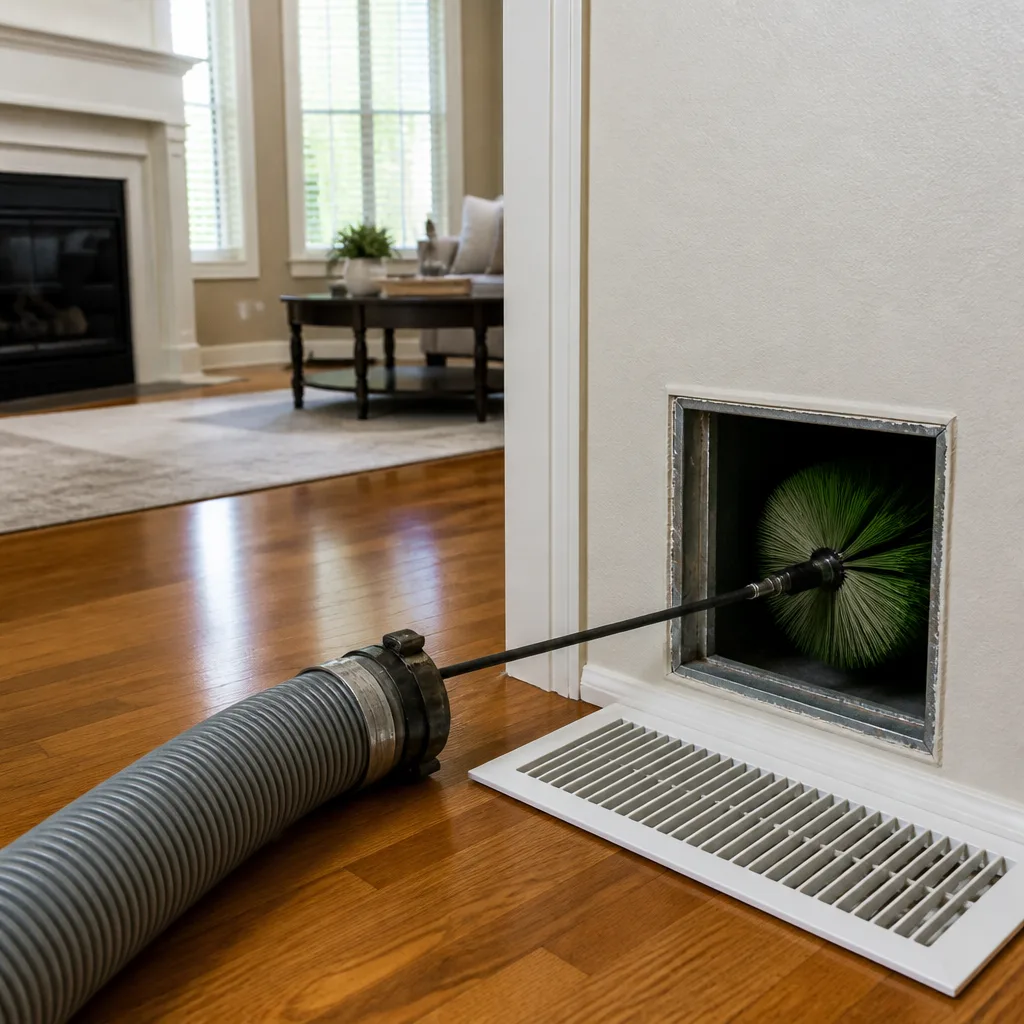
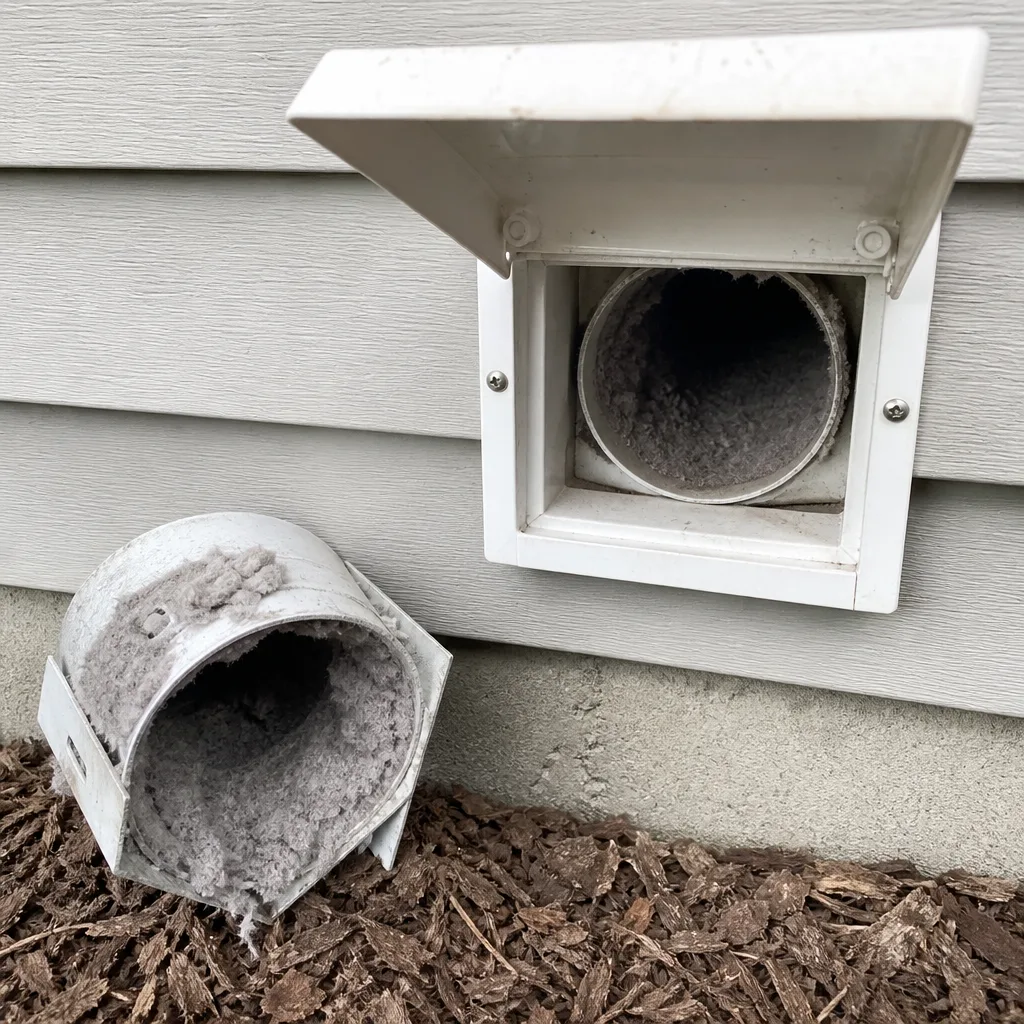
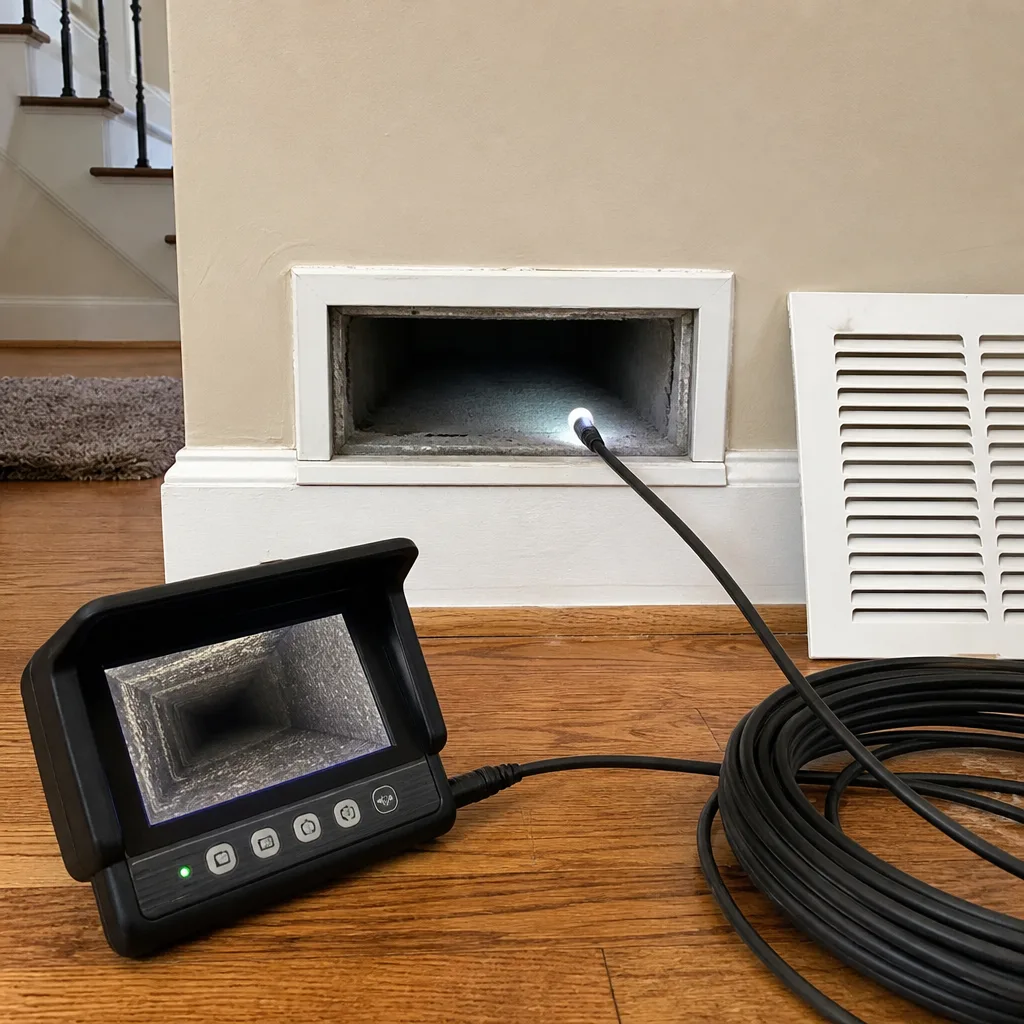
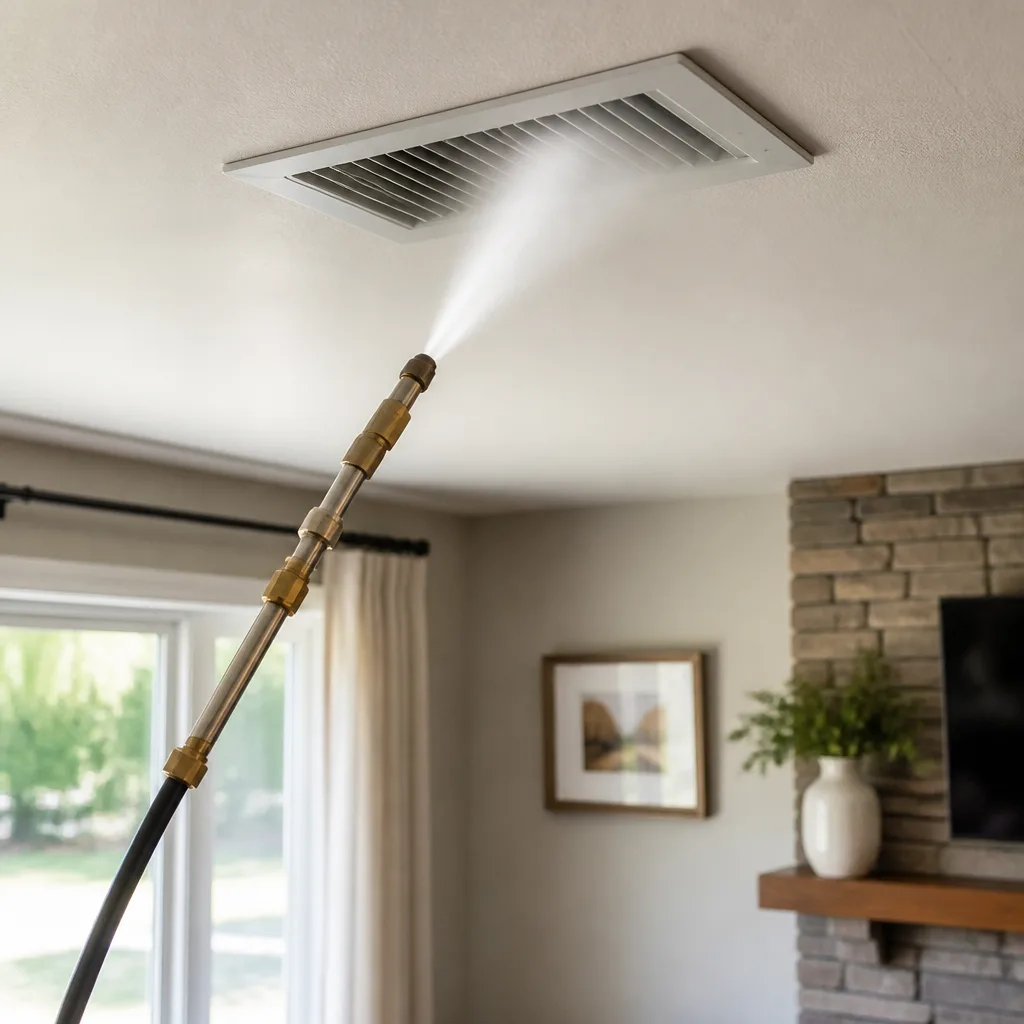
That "$99 whole-house special" is a bait ad - the real number appears once they are in your hallway, or the "clean" is a shop-vac at the register. We photograph the inside of your ducts before and after instead.
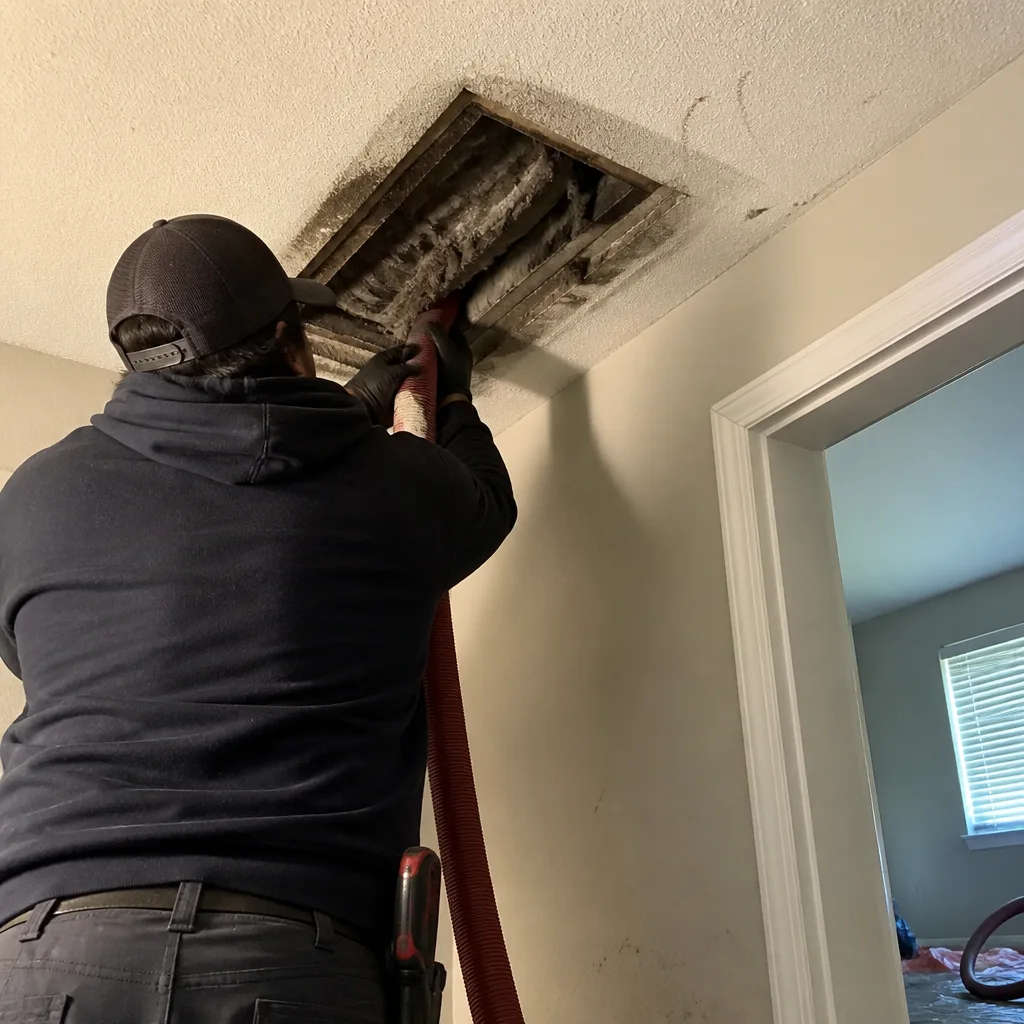 Before
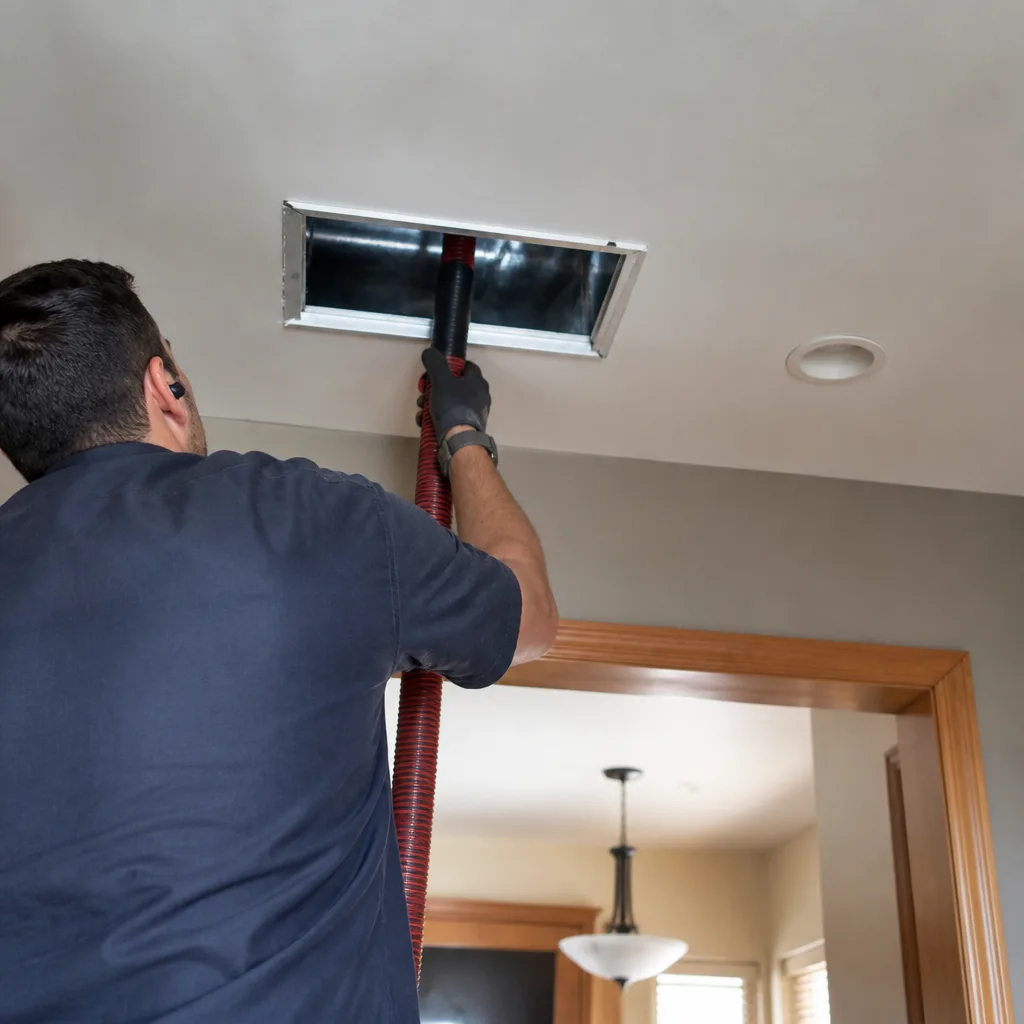 After
After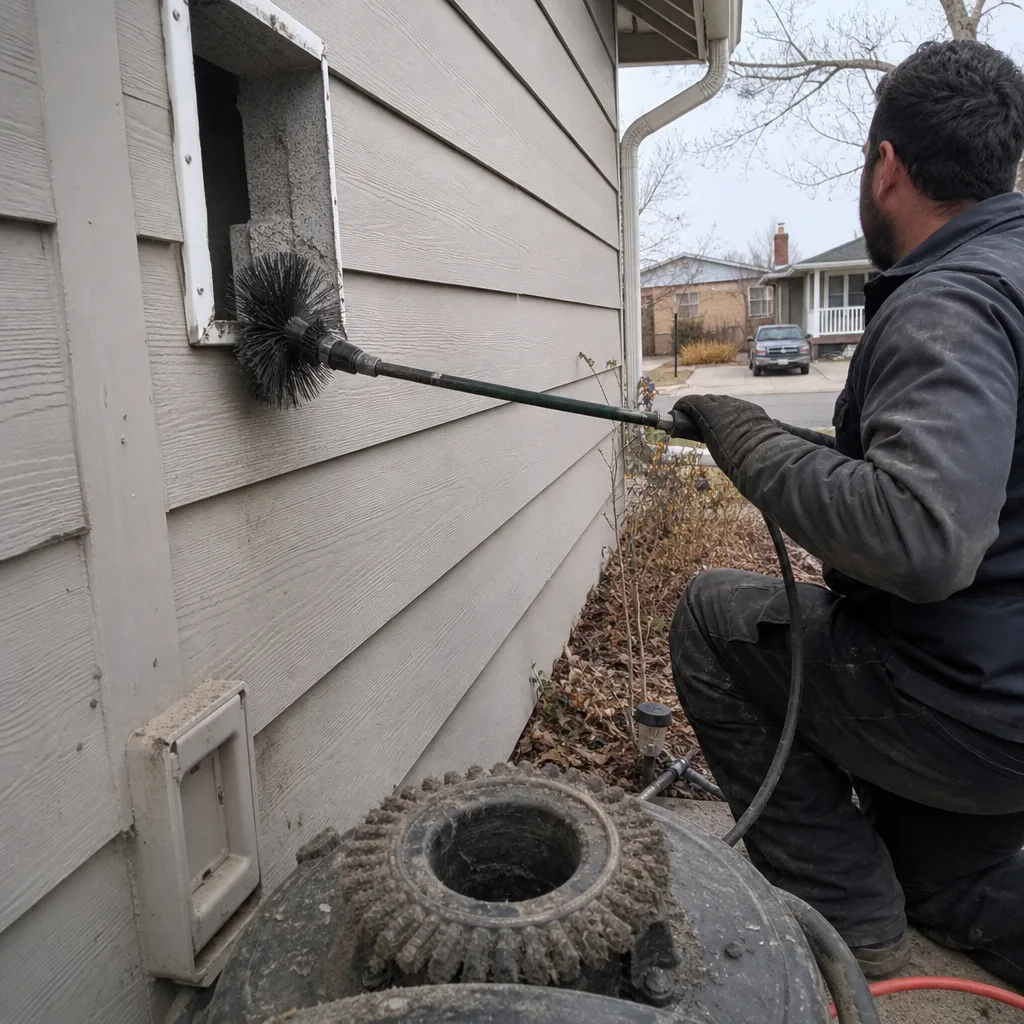 Before
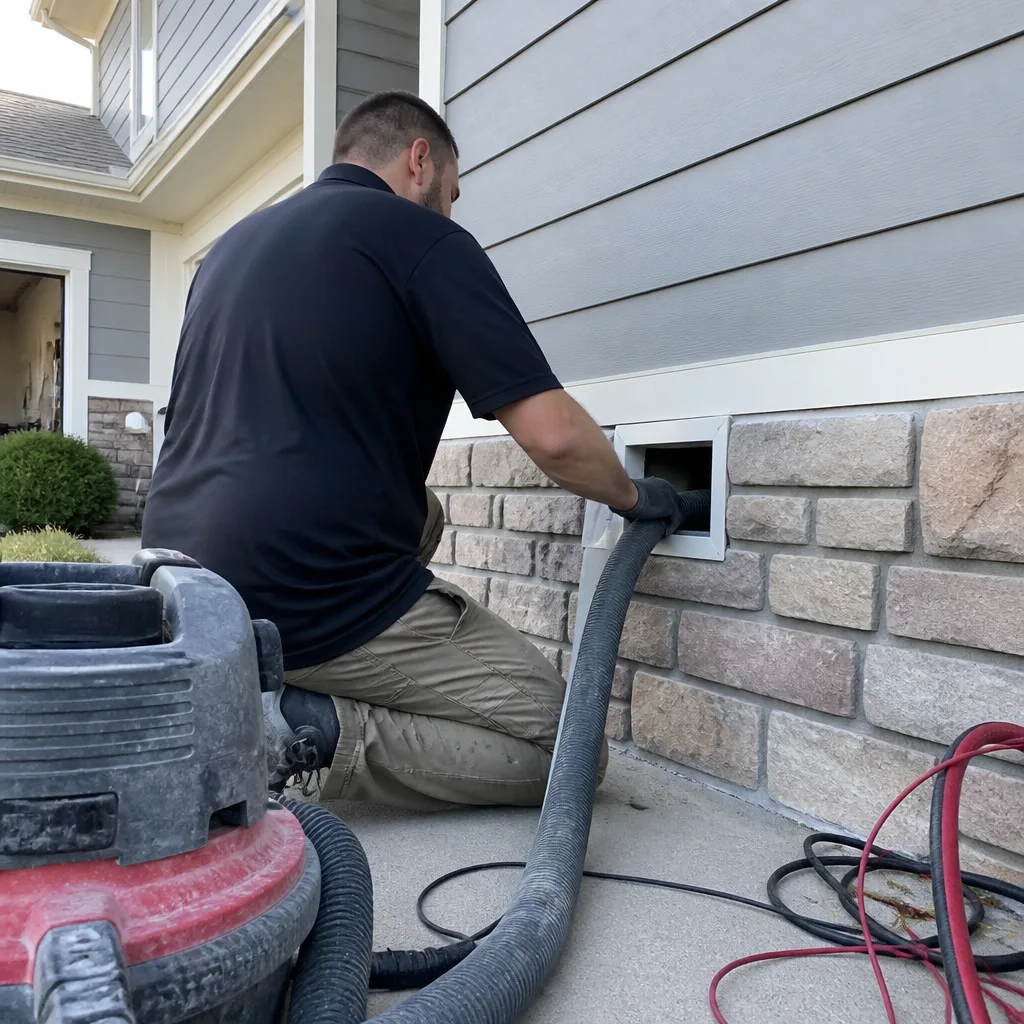 After
After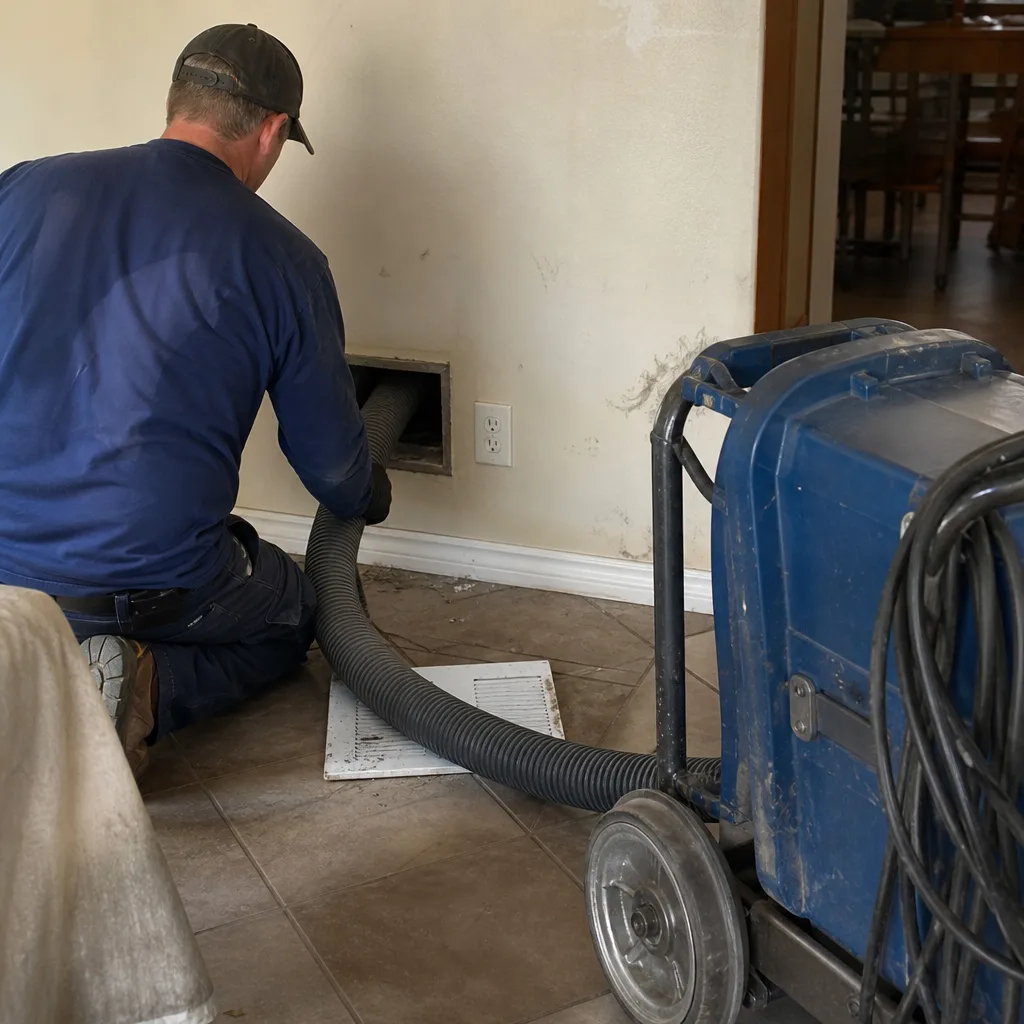 Before
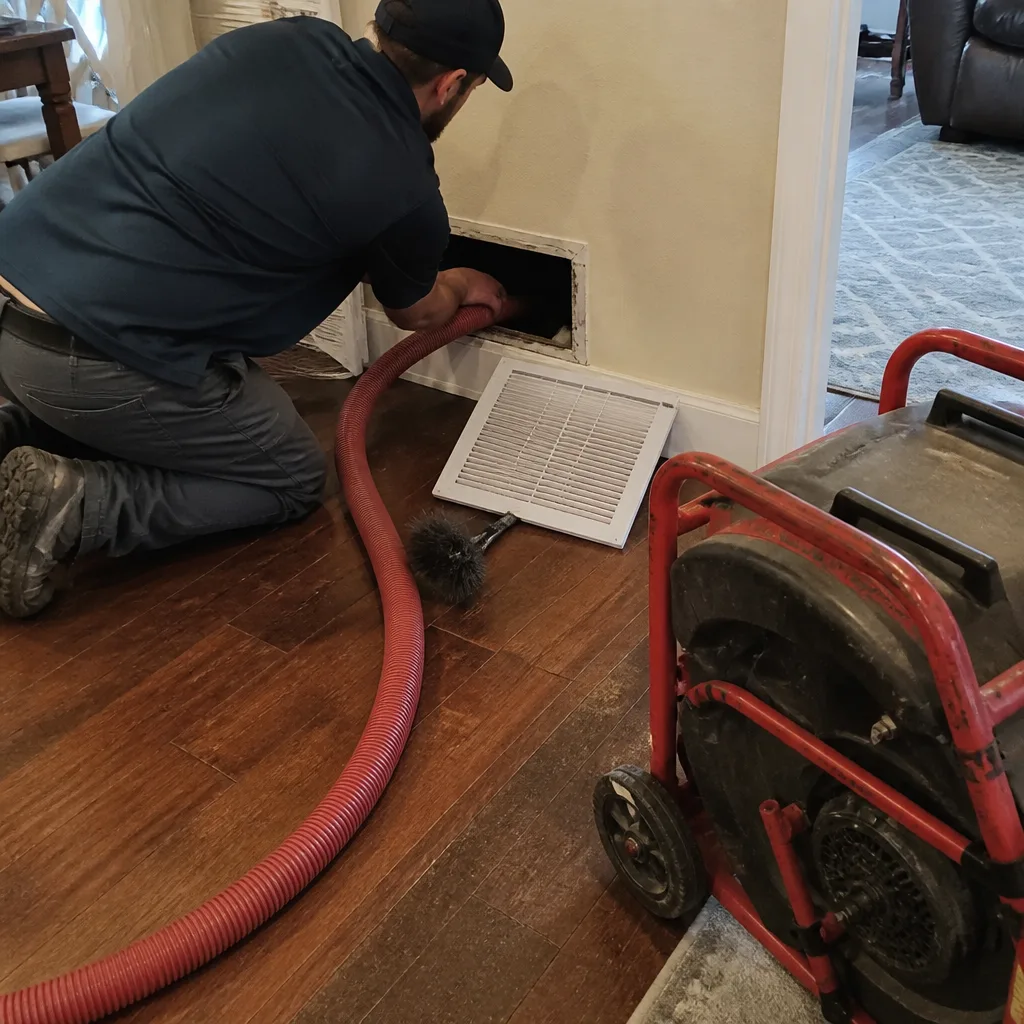 After
AfterAir Duct Cleaning Maintenance Checklist for Parker Homeowners
If your last air duct cleaning came with no written record of what was found, you don’t have a maintenance history - you have a receipt for a truck visit. Most Parker homeowners treat duct maintenance as a calendar event (“every three years”) rather than a diagnostic rhythm. But in our experience across 52,000+ homes since 2013, the homeowners who make informed decisions are the ones who gather observable evidence on a documented timeline. Parker sits at 5,900 feet with a semi-arid climate, high spring winds, and increasingly active summer wildfire seasons - conditions that create distinct contamination patterns inside ductwork. This guide replaces gut-feeling decisions with a month-by-month checklist, simple self-inspection techniques, and a documentation log that turns your HVAC system into a readable record.
Quick Answer
A proper Air Duct Cleaning maintenance checklist for Parker homeowners includes monthly return grille inspections, quarterly filter changes with altitude-appropriate MERV ratings, seasonal post-event checks after spring windstorms and summer wildfire smoke, and annual documentation of what was observed, when, and what action was taken. The checklist’s purpose is not to schedule cleanings arbitrarily, but to build evidence that shows whether professional cleaning is actually warranted.
Table of Contents
- Month-by-Month: Parker’s Climate Calendar
- How to Inspect Your Own Return Air Grilles
- Filter MERV Ratings for Parker’s Altitude
- Building Your Documentation Log
- Three Signs of Duct Damage, Not Dirt
- What Professional Equipment Actually Does
- Common Mistakes to Avoid
- When to Call a Professional
- Frequently Asked Questions
- The Bottom Line
BeforeAfterMonth-by-Month: Parker’s Climate Calendar
Parker’s location on the Palmer Divide creates a unique contamination calendar. The semi-arid climate, elevation, and proximity to both agricultural land and wildland-urban interface zones mean your ducts face different stressors in different seasons. We’ve documented these patterns across thousands of Air Duct Cleaning in Parker jobs.
January-February: Post-Heating Season Assessment
After two to three months of continuous furnace operation, check your return grilles for dark accumulation. Parker homes built between 2015 and 2020 - a significant portion of the housing stock - often have flex duct runs that sag slightly at elbows, creating low-velocity zones where fine particulate drops out. The white tissue test (detailed in the next section) is most revealing now, when heating season has deposited a full winter’s load.
Action items:
- Perform return grille inspection on all levels
- Note any musty or metallic odors when system first activates
- Record furnace filter condition and date installed
- Check humidifier pad if equipped - mineral scale can become airborne
March-April: Spring Wind Event Protocol
The Front Range spring wind pattern drives extraordinary particulate loads. Sustained winds of 40-60 mph, common in March and April, pull fine dust through soffit vents, attic hatches, and any envelope gaps. In Parker neighborhoods near open land - think Pradera, Reata North, or the areas east of Jordan Road - we’ve photographed return ducts with visible soil lines corresponding to specific wind events.
Action items:
- Inspect attic ductwork penetrations for visible dust trails
- Run the white tissue test within 48 hours of major wind events
- Check exterior intake screens if your system has fresh air makeup
- Document any new rattling or whistling - wind pressure can dislodge duct connections
May-June: Pre-Summer Baseline
Before cooling season begins, establish your baseline. The transition period lets you distinguish heating-season accumulation from cooling-system issues. Parker homes with crawl space or basement duct runs should pay particular attention to mustiness - spring moisture can condense on cool duct surfaces in these spaces.
Action items:
- Replace filter regardless of apparent condition - start cooling season clean
- Photograph return grille interiors for comparison
- Test all supply registers for balanced airflow
- Note any rooms that feel stuffy despite open vents
July-August: Wildfire Smoke Monitoring
Summer wildfire smoke has become a recurring factor for Parker homeowners. The 2020-2023 fire seasons deposited measurable particulate in ducts even when homes remained sealed. Standard HVAC filters are not designed for wildfire smoke particles (0.4-0.7 microns). If you’ve run your system during smoke events, your filter and duct surfaces have captured more than usual. See our Air Duct Cleaning Warning Signs: A Parker Homeowner’s Reference Guide for additional red flags.
Action items:
- Upgrade to MERV-11 minimum during active smoke periods if your system can handle it (see Filter MERV section)
- Inspect filter weekly during prolonged smoke events
- Run tissue test after smoke clears
- Document any visible ash residue at return grilles
September-October: Transition Documentation
The fall shoulder season is your best opportunity for comparison. You have a full year’s cycle to review. This is when we recommend Parker homeowners pull their documentation log and look for patterns.
Action items:
- Compare all seasonal photographs
- Review filter change frequency - did you need more changes in one season?
- Schedule professional inspection if any trend concerns you
- Update your log with annual summary notes
November-December: Pre-Heating Preparation
Final filter change before heating season. Check that your humidifier, if present, is clean and ready. Parker winter humidity drops to 15-20 percent; many homeowners run humidifiers hard, and dirty reservoirs can distribute biological contamination.
Action items:
- Install fresh filter dated for winter
- Clean or replace humidifier components
- Verify carbon monoxide detector function
- Final annual documentation review
How to Inspect Your Own Return Air Grilles
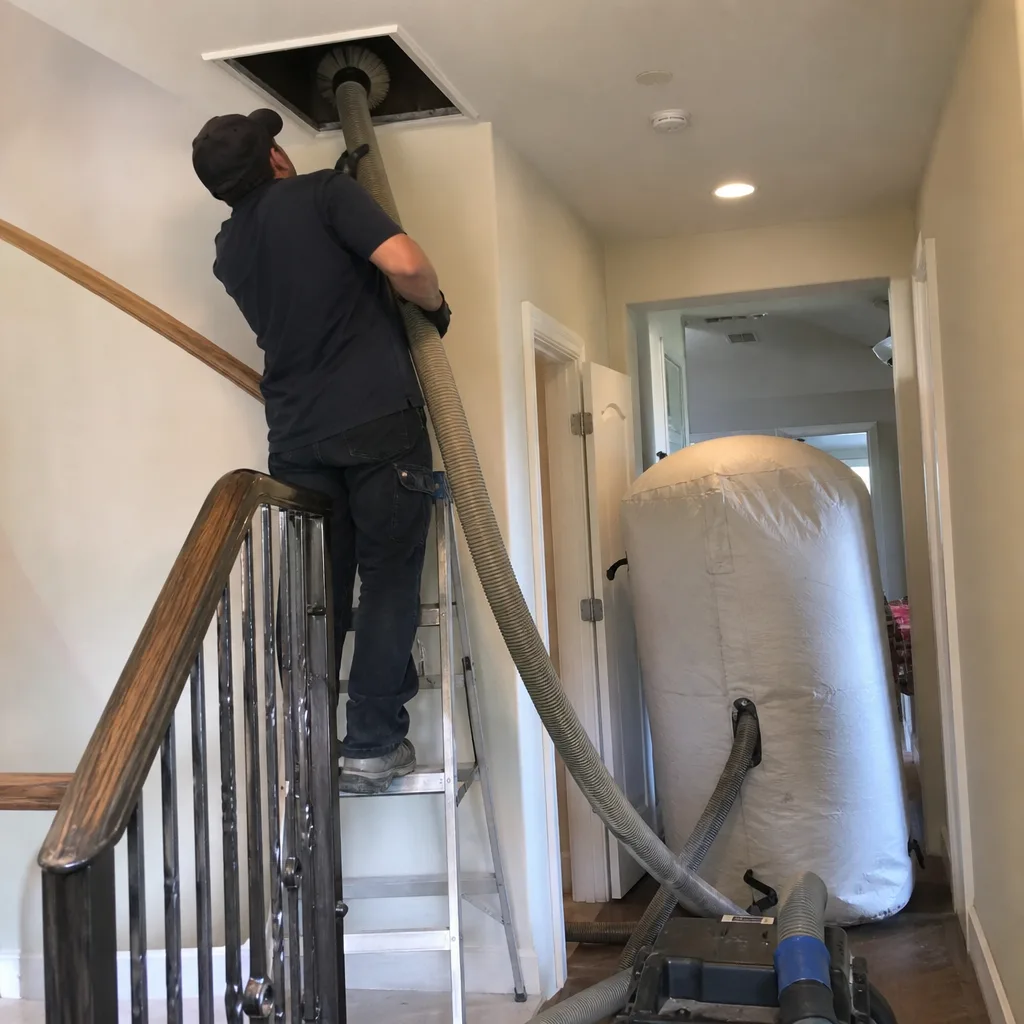
Professional duct inspection uses borescope cameras and negative-pressure testing. But homeowners can gather meaningful evidence with two tools: a white tissue and a flashlight. The goal is not to replace professional assessment, but to build a documented record that shows when professional assessment is warranted.
The White Tissue Test
- Turn your HVAC system off for at least 30 minutes so particulate settles.
- Hold a white facial tissue against a return grille with the system still off.
- Turn the system fan on and hold the tissue in place for 10 seconds.
- Remove and examine the tissue against a light source.
What you’re looking for: visible gray or brown staining indicates particulate loading in the return duct. A clean tissue suggests either clean ducts or, more commonly, a filter that is doing its job. The test is most informative when repeated monthly and photographs are kept for comparison.
Flashlight Inspection of Grille Interior
Remove the return grille (most pop off with gentle pressure or a single screw). Shine a flashlight into the duct opening. You’re looking for:
- Visible debris depth: Anything more than a light dust coating on duct walls warrants note. A debris ridge at the first elbow downstream from the grille is common and significant - it shows where airflow drops and particulate falls out.
- Uniformity: Streaking or concentrated deposits suggest an upstream problem (filter bypass, grille gap, or duct leak) rather than normal accumulation.
- Moisture or staining: Dark, irregular patches that smear when touched indicate biological growth. This is not a DIY situation - it requires professional assessment.
- Construction debris: In Parker homes built 2015-2020, we still find drywall dust, wood chips, and insulation fragments from original construction. These should not persist past the first year.
Photograph what you see. Date the photo. Store it with your filter receipts. This is the beginning of a real maintenance history.
Filter MERV Ratings for Parker’s Altitude
Filter selection at 5,900 feet is not the same as at sea level. Thinner air means lower system static pressure to begin with, and a restrictive filter can push blower motors past design limits. We’ve measured static pressure in hundreds of Parker homes; the results inform our recommendations.
MERV Basics
MERV (Minimum Efficiency Reporting Value) rates a filter’s ability to capture particles from 0.3 to 10 microns. Higher MERV means finer filtration but greater airflow resistance. The tradeoff is not abstract - it’s measured in blower motor amperage draw and duct static pressure.
Parker-Specific Guidance
MERV 8: Minimum we recommend for any Parker home. Captures pollen, dust mites, and carpet fiber. Suitable for older systems (pre-2010) or any system where you don’t know the blower capacity. Pressure drop: typically 0.15-0.20 inches water column at rated airflow.
MERV 11: Our standard recommendation for Parker homes with systems installed 2010 or later. Captures fine dust, mold spores, and pet dander. Handles spring wind particulate and moderate wildfire smoke. Pressure drop: 0.25-0.35 inches w.c. - verify your system can tolerate this with a static pressure test if uncertain.
MERV 13: Appropriate only for systems with variable-speed blowers and confirmed adequate static pressure. Captures bacteria, smoke particles, and some virus carriers. In Parker, we see MERV-13 filters cause high-limit trips in winter and frozen coils in summer when installed on marginal systems. If your home is in Canterberry, Idyllwilde, or another neighborhood with newer high-efficiency equipment, MERV-13 may work well. If you have an original builder-grade furnace in an older Parker subdivision, it probably won’t.
Never install a MERV-13 without verifying your system’s static pressure. The filter that protects your lungs can damage your equipment.
Change interval: Every 60-90 days for MERV 8, every 60 days for MERV 11, every 30-45 days for MERV 13 during active contamination periods. Parker spring wind season and wildfire smoke windows may require more frequent changes regardless of MERV rating.
Building Your Documentation Log
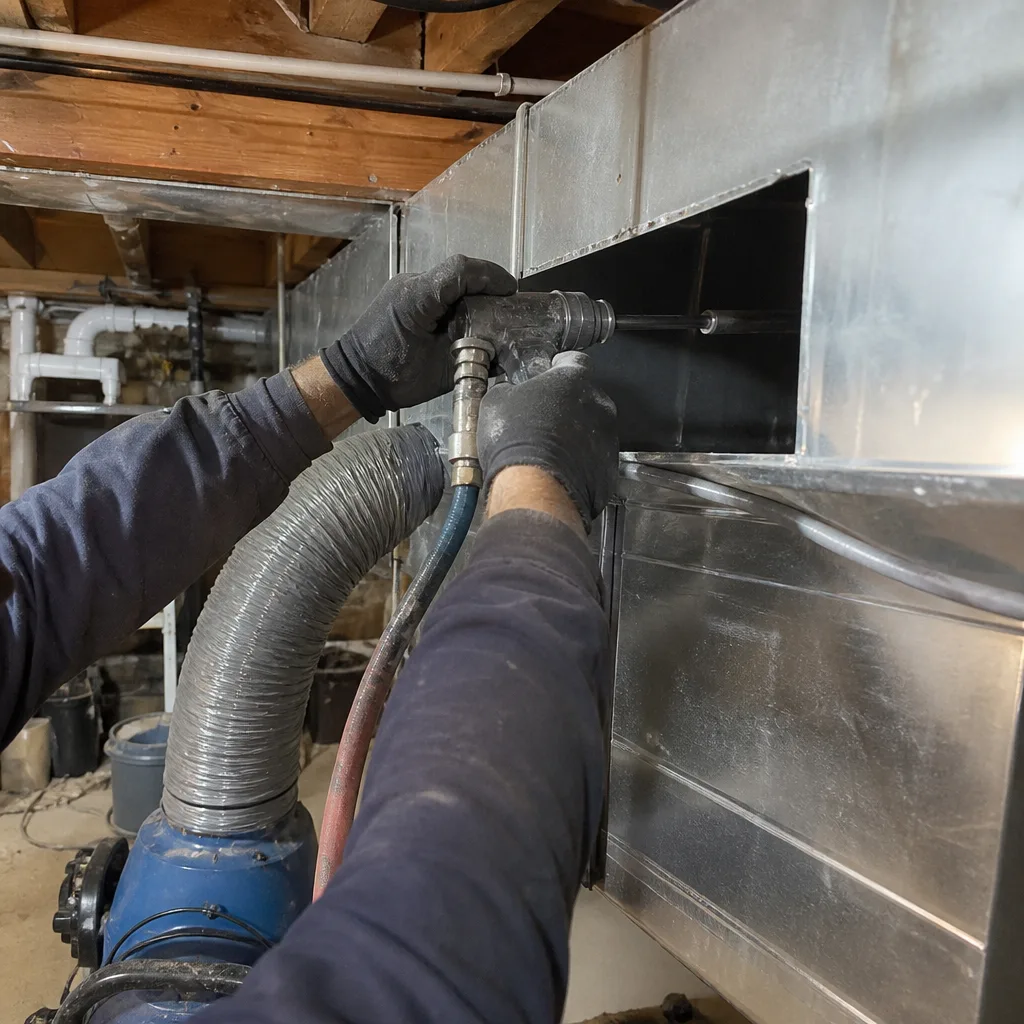
A maintenance log is not a calendar of cleanings. It is an evidence trail that answers three questions: What was observed? When? What action was taken? The log transforms your HVAC system from a black box into a readable record.
Minimum Log Entries
Each entry should include:
- Date and time
- Outdoor conditions (temperature, any notable events like wind or smoke)
- Filter MERV rating and installation date
- Observations from white tissue test and grille inspection
- Any system performance notes (noise, odor, temperature balance)
- Photograph file names for that date
- Action taken (filter change, professional call, nothing at this time)
Example Log Entry
March 15, 2024. Outdoor: 52°F, sustained winds 45 mph from west. Filter: MERV 11 installed Feb 3. Tissue test: moderate gray staining on tissue, more than Feb. inspection. Grille photo CR-2024-0315: visible dust ridge at first elbow, approximately 1/4 inch depth. System note: slight whistle from attic on west side. Action: scheduled professional inspection for duct leak assessment. No cleaning scheduled at this time.
This entry tells a story. It connects a weather event to an observable change. It distinguishes between cleaning need and repair need. A contractor reading this log can make informed recommendations instead of selling a standard package.
Store your log digitally - cloud storage with dated photo folders - and print a summary annually. Include it when you sell your home; documented HVAC maintenance is a transaction asset in Parker’s competitive market.
Three Signs of Duct Damage, Not Dirt
Cleaning cannot fix a disconnected joint. This distinction is where homeowners waste money. We’ve arrived at CleanRun Air Duct Cleaning Parker home appointments where the customer’s concern was “dirty ducts” and the actual problem was structural damage that cleaning would have masked.
Sign 1: Uneven Airflow That Follows a Pattern
One room consistently underperforming, especially after wind events, suggests a disconnected duct run rather than blockage. In Parker, we see this frequently in second-story rooms above garage spaces, where temperature differentials and vibration stress flex duct connections. The grille may look clean; the problem is air escaping into the attic or wall cavity before reaching the register.
Check: Remove the supply register and shine a flashlight into the boot. If you see light from an unintended direction, or if the duct collar moves freely, you have a connection failure.
Sign 2: Filter Collapse or Bypass Tracks
A filter that bows inward, shows dirt streaks around its edges, or fails to seat properly indicates pressure imbalance from a duct leak downstream. The filter is working harder because air is bypassing the intended path. Cleaning the ducts won’t correct the pressure; sealing the leak will.
In Parker homes with basement mechanical rooms, we find filter bypass caused by negative pressure from leaky return plenums. The filter gets dirty fast, the homeowner changes it frequently, and the root cause persists.
Sign 3: Visible Insulation Degradation at Grille
Fiberglass duct liner that is fraying, collapsing, or shedding particles at the register indicates the duct interior has deteriorated. This is not a cleaning issue; it’s a replacement issue. The liner’s adhesive has failed, often due to temperature cycling or moisture exposure. Running a brush through this duct will make it worse, not better.
Professional assessment under the H.A.V.E.N. Standard includes video inspection to distinguish cleanable surfaces from damaged ones. Haven Standard Clause 1 - Written Price Before Any Work Starts - applies here: we photograph the damage, explain why cleaning is inappropriate, and quote repair or replacement if the homeowner chooses to proceed. For related regulatory context, see Air Duct Cleaning Permits, Codes & Inspections in CO: What You Need to Know.
What Professional Equipment Actually Does
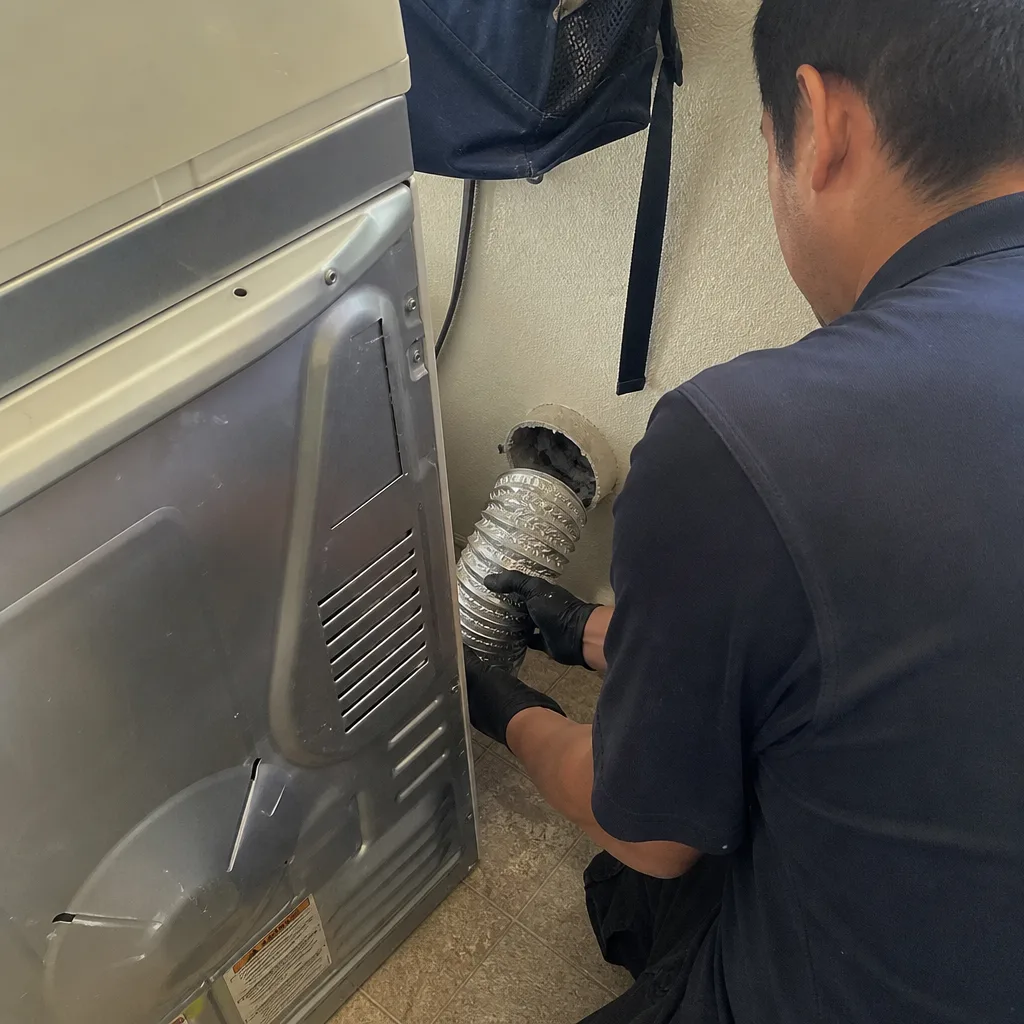
Understanding what professional duct cleaning equipment does - and what it cannot do - helps homeowners evaluate whether a proposed service matches their actual condition. We name our equipment brands so customers can verify specifications independently.
Negative-Pressure Extraction Systems
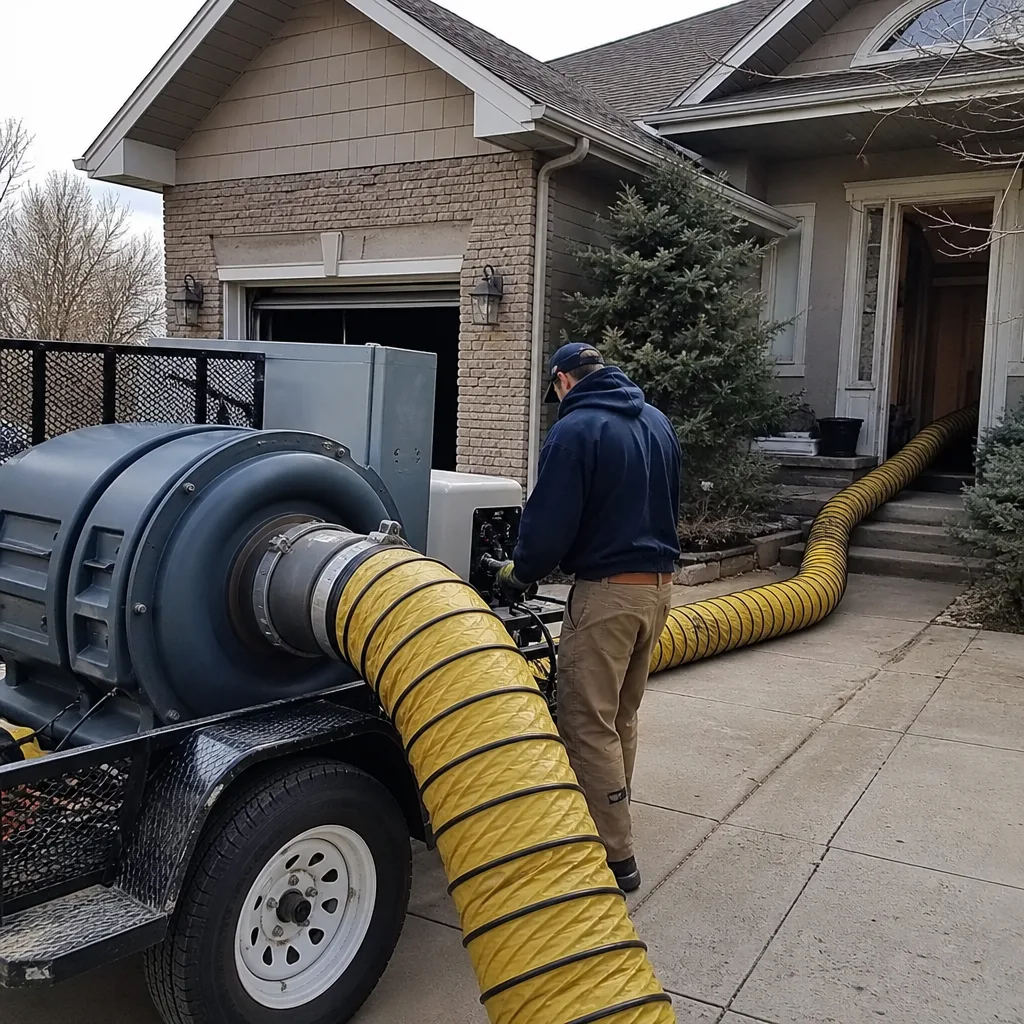
The industry standard for whole-system cleaning uses a large vacuum unit connected to the duct trunkline, creating negative pressure throughout the system while agitation tools dislodge debris. Our Nikro and Abatement Technologies portable units generate sufficient airflow to maintain negative pressure even in larger Parker homes with extended duct runs. The vacuum captures dislodged material at the source rather than pushing it through the system.
Rotary Brush Systems
Rotobrush systems use a rotating brush on a flexible cable, fed through individual duct runs. Effective for light to moderate debris in metal or smooth flex duct. Less effective where debris has hardened or where duct turns are sharp. We use Rotobrush equipment for targeted cleaning of individual runs after negative-pressure extraction of the main system.
Compressed Air Tools
Skipper balls and whips use compressed air to create turbulence inside duct walls. Useful for dislodging fine particulate that brushes miss. Requires sufficient compressor capacity - our equipment is sized for the static pressure demands of Parker’s altitude, where air is less dense and tool performance degrades without compensation.
What No Equipment Does
No cleaning equipment repairs disconnected joints. No cleaning equipment restores degraded duct liner. No cleaning equipment seals leaks. Equipment selection matters, but accurate diagnosis matters more. The HVAC Cleaning in Parker jobs we decline because the problem is repair, not cleaning, outnumber the ones we accept by a significant margin.
Our documented photo record - before and after every run - shows exactly what the equipment achieved in that specific system. If a contractor cannot or will not show you comparable documentation from your type of home, you are not buying a documented service.
Common Mistakes to Avoid
- Cleaning on a calendar instead of by condition. “Every three years” ignores whether your ducts are actually dirty, whether your filter has been effective, and whether your home has experienced contamination events. Clean when evidence warrants it.
- Installing the highest MERV filter available without checking system capacity. We’ve replaced blower motors in Parker homes where MERV-13 filters caused overheating. The filter package says “better filtration”; it doesn’t say “check your static pressure first.”
- Ignoring spring wind events. Parker March-April winds drive more particulate into ducts than a typical year of normal operation. A single major wind event can justify inspection; ignoring it because “I just had them cleaned” misses the point.
- Accepting “cleaning” for what is actually damage. A disconnected duct run will make rooms uncomfortable and raise energy bills. Cleaning it wastes money and delays proper repair. Always verify that airflow problems are dirt problems first.
- Not documenting what was done. Without dated photos and written scope, you cannot compare condition over time, evaluate contractor performance, or support a warranty claim. Every Dryer Vent Cleaning in Parker and duct job we complete includes the documented photo record as a standard deliverable - not an extra.
- Choosing by price alone in a market saturated with coupon offers. The $79 duct cleaning in Parker is not a documented service. It is a vehicle for upselling. Written upfront pricing under Haven Standard Clause 1 exists precisely because this practice is endemic.
- Neglecting the return side. Supply ducts deliver conditioned air; return ducts pull air back. The return side is typically dirtier, yet some services focus only on supplies. A complete scope addresses both.
When to Call a Professional
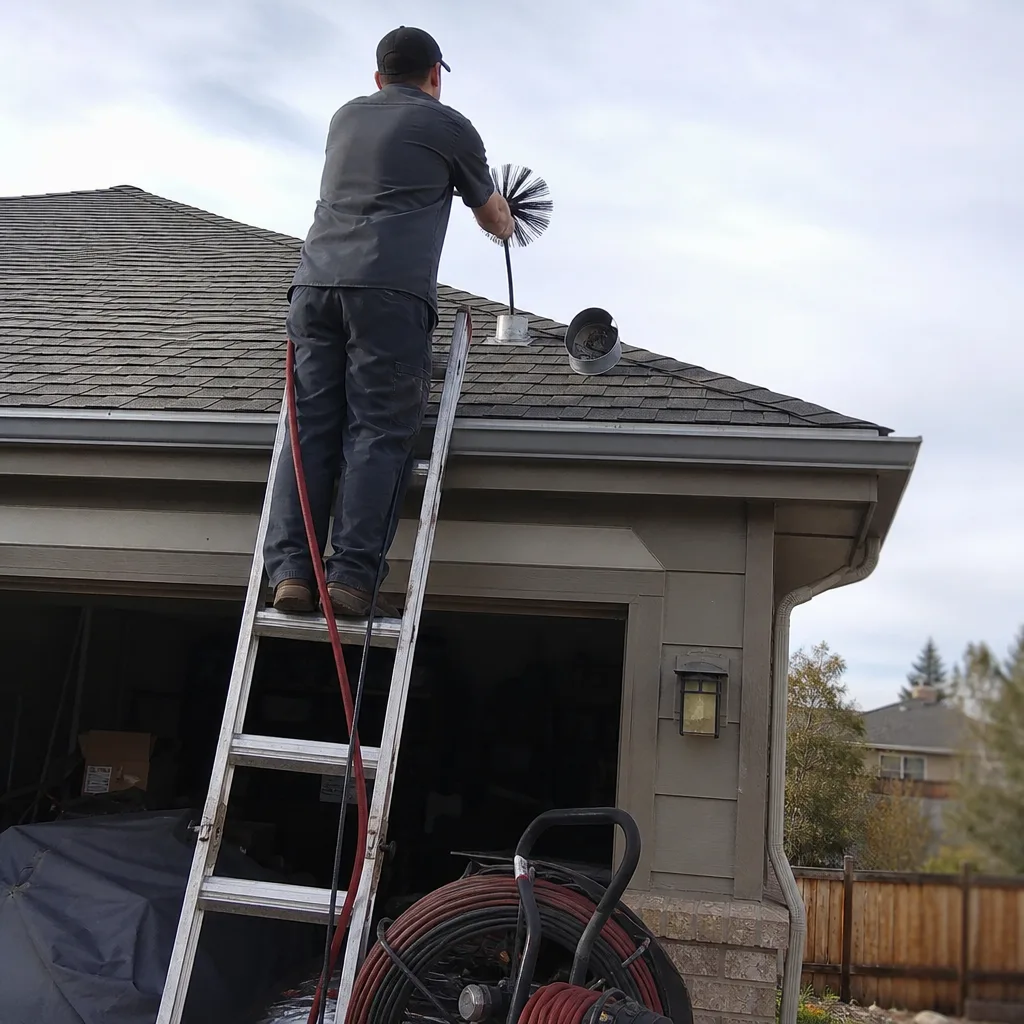
Call for professional assessment when: your documentation log shows accelerating accumulation, the white tissue test produces heavy staining after filter change, you observe moisture or biological growth, airflow is persistently unbalanced, or you suspect duct damage rather than dirt. In Parker, we also recommend professional inspection after major wildfire smoke events, even if your system was not actively running - pressure differentials can drive infiltration.
CleanRun Air Duct Cleaning Parker offers free estimates in Parker. Our assessment includes written scope, written price under Haven Standard Clause 1, and no obligation. Call (719) 259-4520.
Frequently Asked Questions
Whole-system air duct cleaning in Parker typically ranges from $450 to $850 for a standard single-family home, depending on system size, accessibility, and condition. Prices below $300 generally indicate limited scope or bait-and-switch pricing. CleanRun provides a written price before any work starts - Haven Standard Clause 1 - with no per-vent add-ons. Call (719) 259-4520 for an exact quote; estimates are free.
Low quotes typically exclude the return side, use portable shop vacuums instead of negative-pressure extraction, or plan to upsell once on site. The $79 coupon model relies on converting a low entry price into $400-$800 of “necessary” additional services. Written upfront pricing with defined scope protects against this. Ask any contractor: what equipment brands will be used, what is included in the base price, and what documentation you will receive. Answers that are vague or evasive predict invoice expansion.
Demand a documented photo record of every duct run, before and after, delivered as part of the job record. This has been CleanRun’s practice since 2013. Without it, you have a contractor’s word. With it, you have verifiable evidence that can be compared to your own inspection log over time.
There is no universal interval. Homes with MERV-11 filters changed on schedule, no pets, and no major contamination events may go 5-7 years. Homes with multiple pets, frequent wildfire smoke exposure, or filter neglect may need attention in 2-3 years. The maintenance checklist in this guide replaces arbitrary scheduling with evidence-based decisions. Document, observe, decide. Explore our more guides & resources for additional home maintenance strategies.
Homeowners can and should perform the return grille inspections and filter maintenance described in this guide. Whole-system cleaning requires professional equipment - negative-pressure extraction, rotary tools, and containment - that is not available for consumer rental at meaningful specification. Attempting to clean ducts with a household vacuum risks damaging flex duct, dislodging connections, or distributing contamination. The diagnostic work is yours; the remediation, when warranted, is professional.
Yes. Lower air density at 5,900 feet reduces heat transfer efficiency, increases blower motor load, and changes filter pressure-drop characteristics. Systems work harder to move less mass. This makes filter selection and static pressure awareness more critical than at sea level. It also means equipment runs longer for equivalent conditioning, increasing particulate circulation. Parker’s altitude is not a footnote; it is a design condition.
The Bottom Line
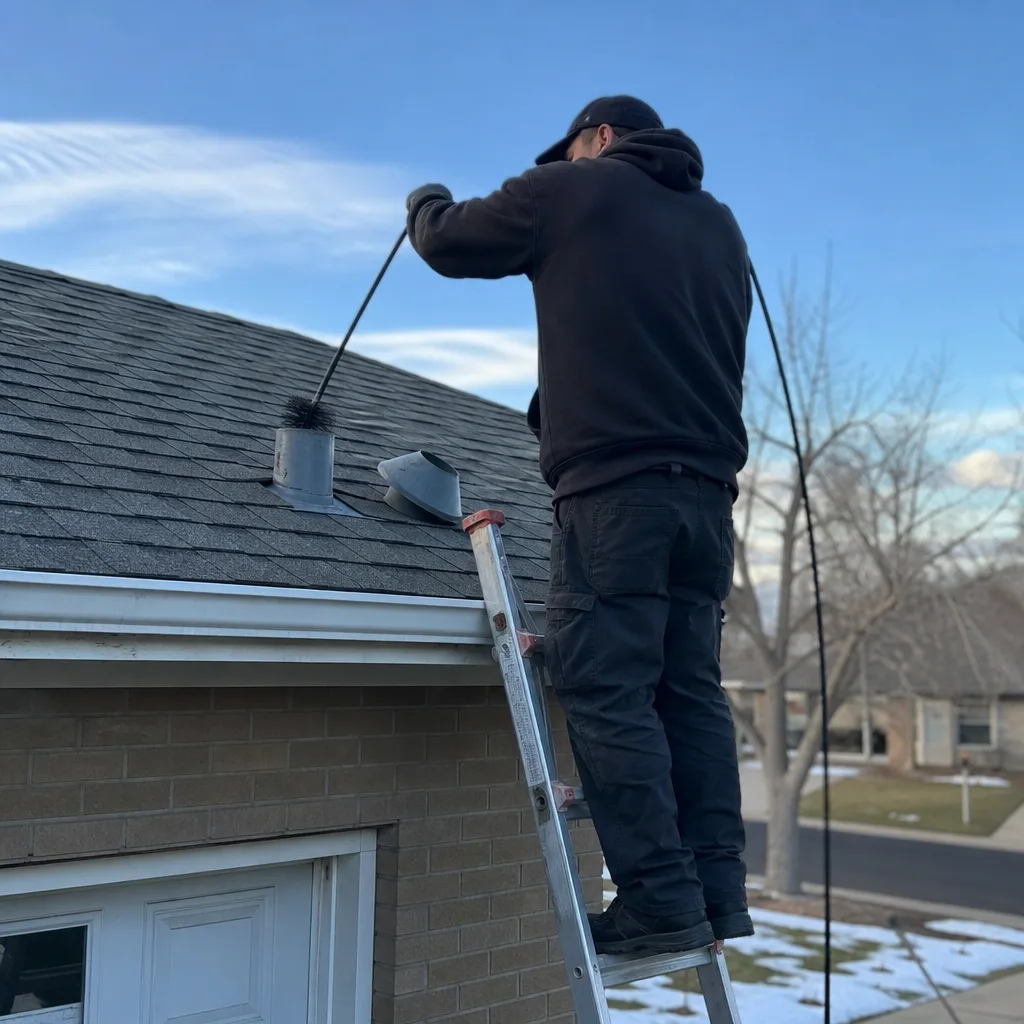
An air duct maintenance checklist is a diagnostic rhythm, not a cleaning schedule. For Parker homeowners, that rhythm follows the local climate calendar: post-heating assessment, spring wind vigilance, wildfire smoke monitoring, and annual documentation review. The white tissue test and grille inspection put observable evidence in your hands. The documentation log turns isolated observations into a readable history. And understanding the difference between dirt and damage saves you from paying for cleaning that cannot solve your actual problem. The homeowners who make the best decisions are the ones who can show a contractor what they’ve observed, when, and what changed. That evidence is your protection against an industry built on opacity.
Written by Tomas Reyes, Owner at CleanRun Air Duct Cleaning Parker, serving Parker since 2013.