
Last updated September 23, 2026
Whole-system duct and dryer vent check with before-and-after photos - you see exactly what came out of your vents
That "$99 whole-house special" is a bait ad - the real number appears once they are in your hallway, or the "clean" is a shop-vac at the register. We photograph the inside of your ducts before and after instead.
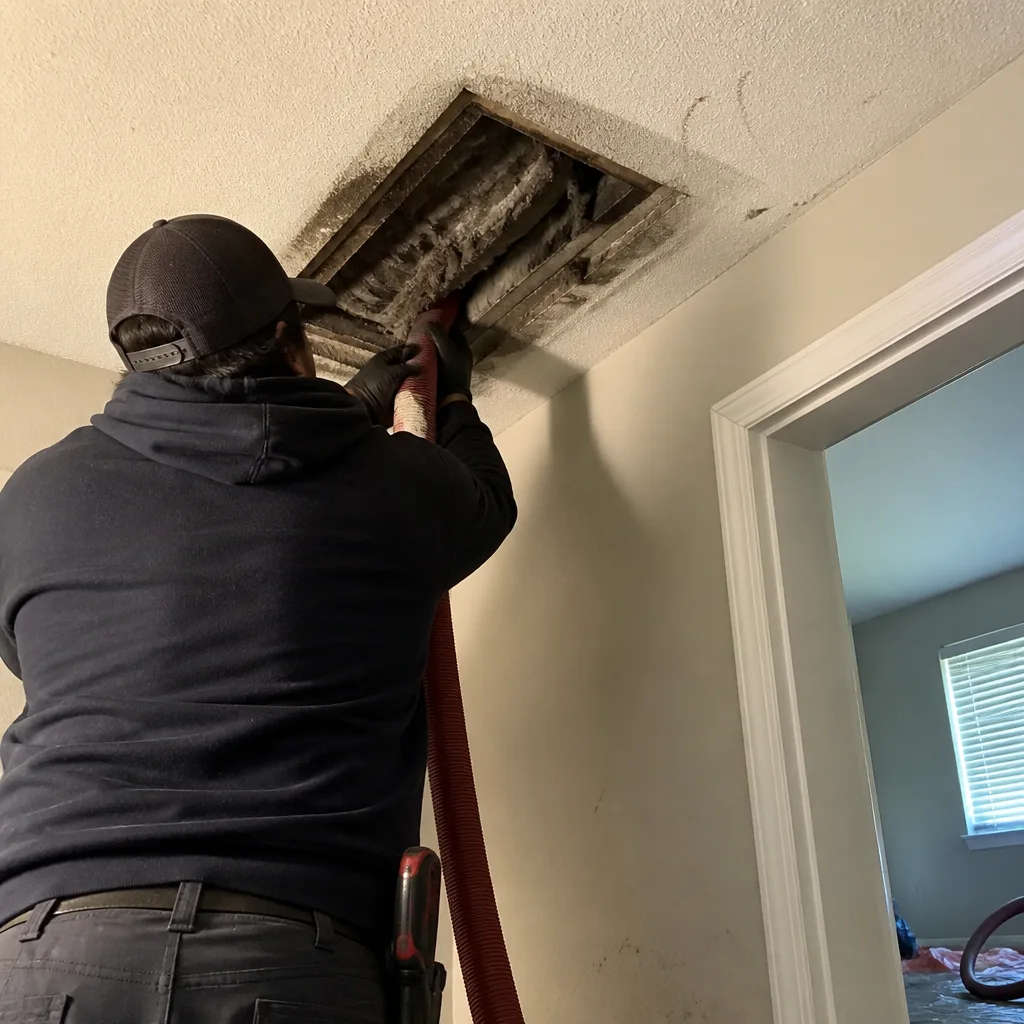 Before
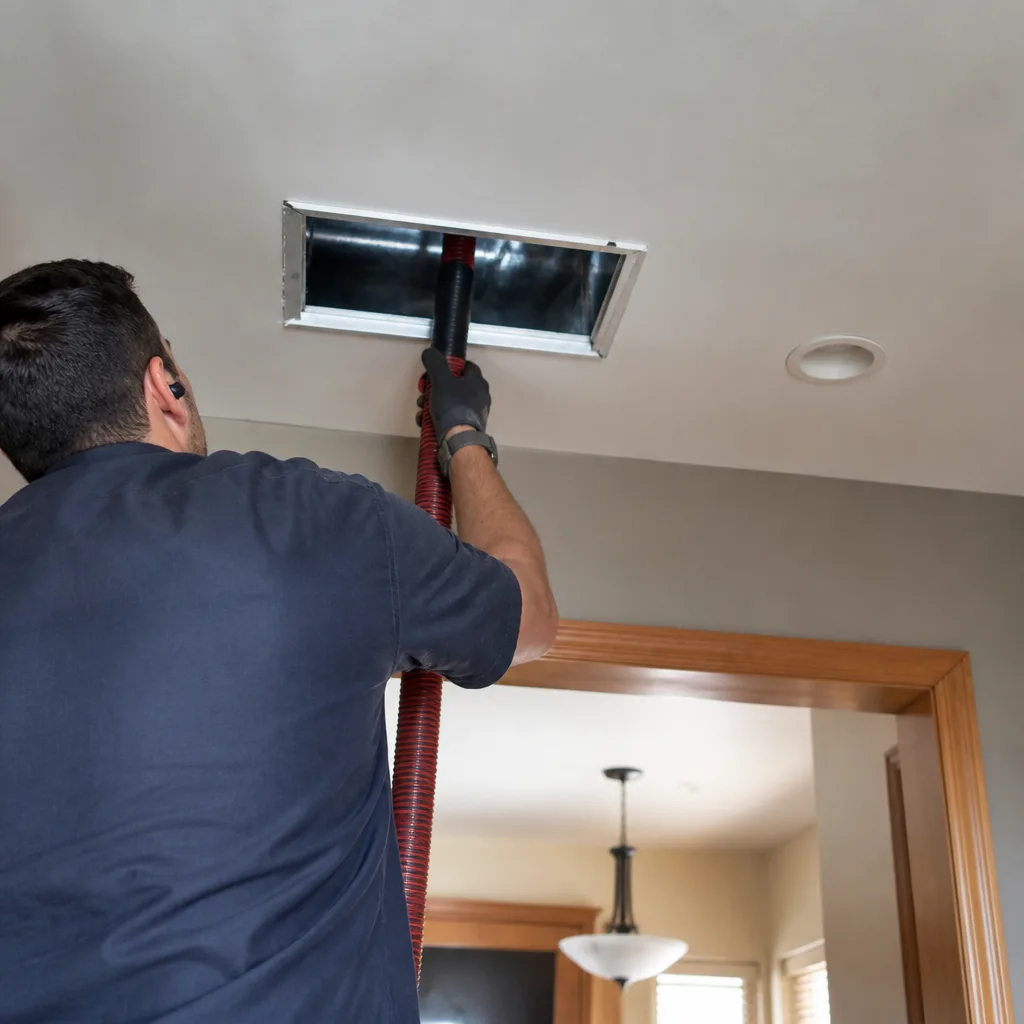 After
After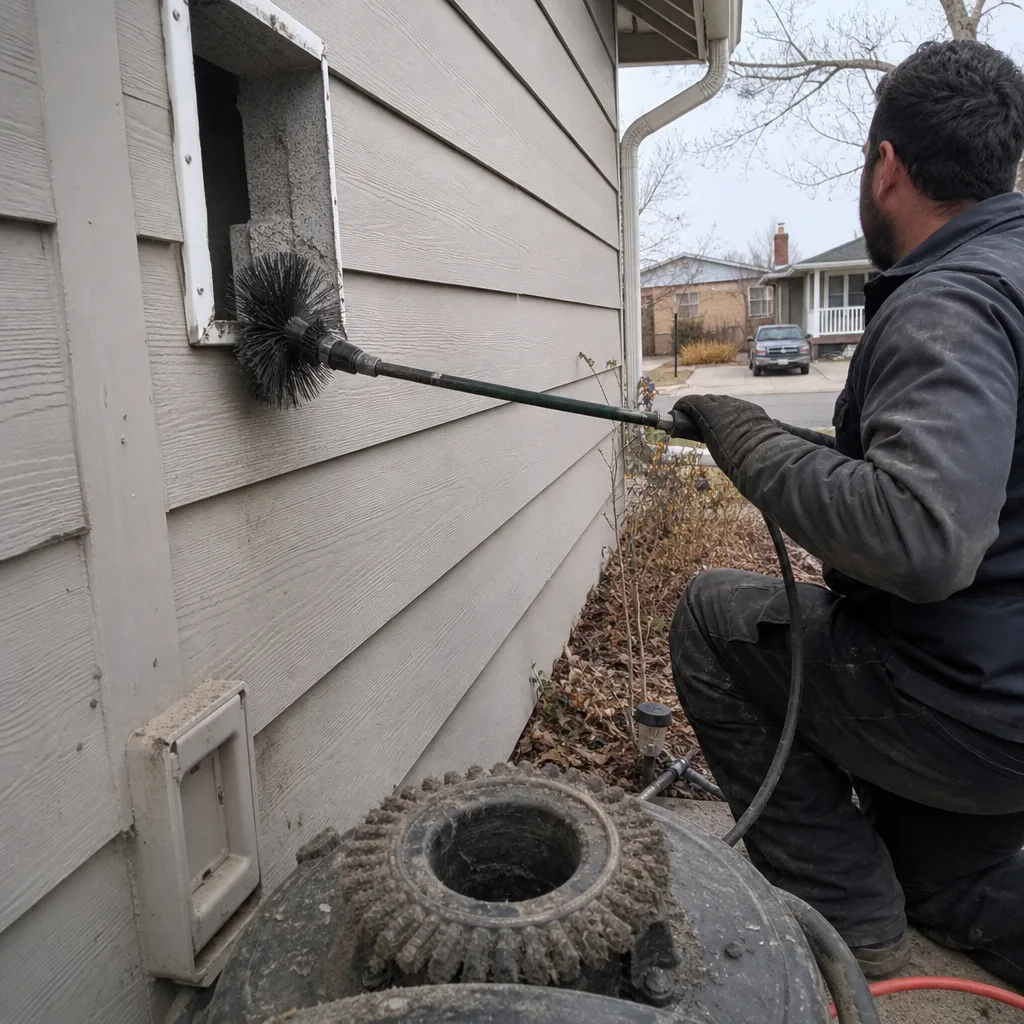 Before
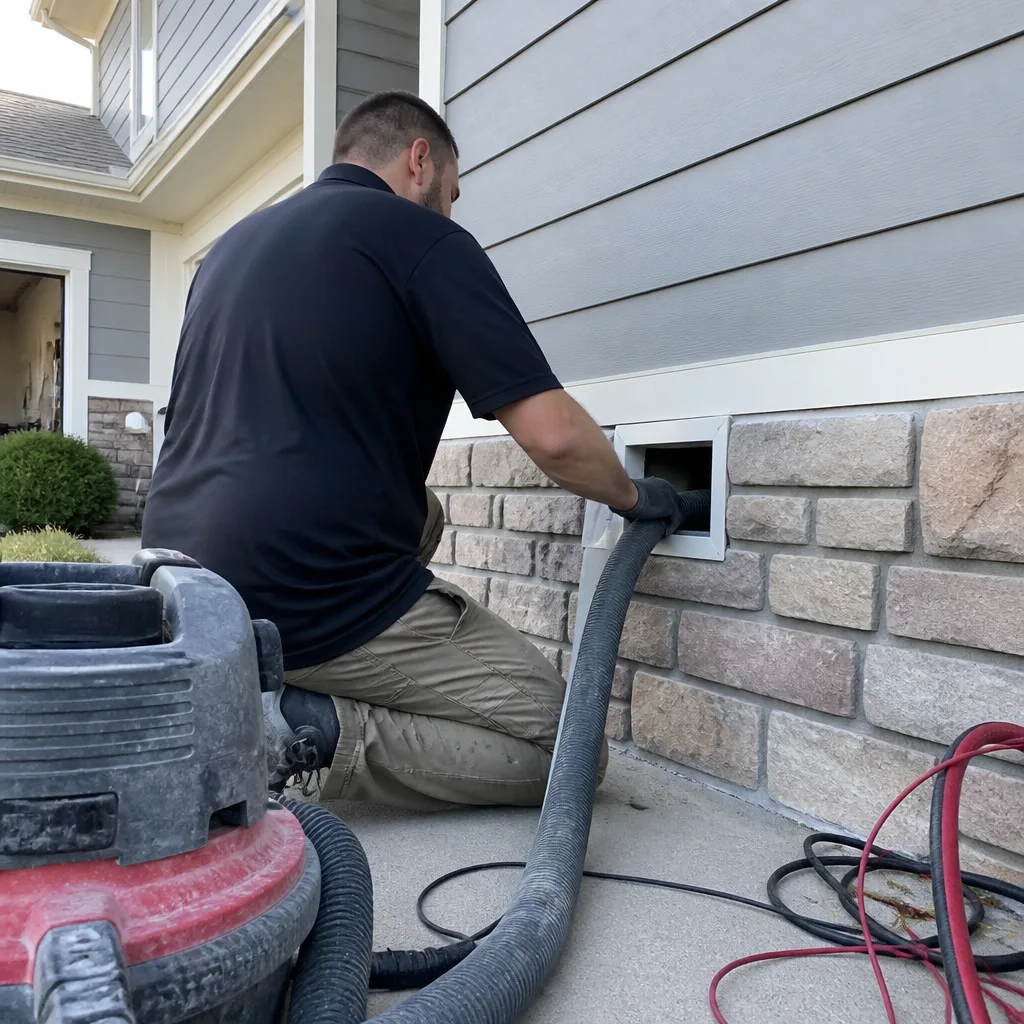 After
After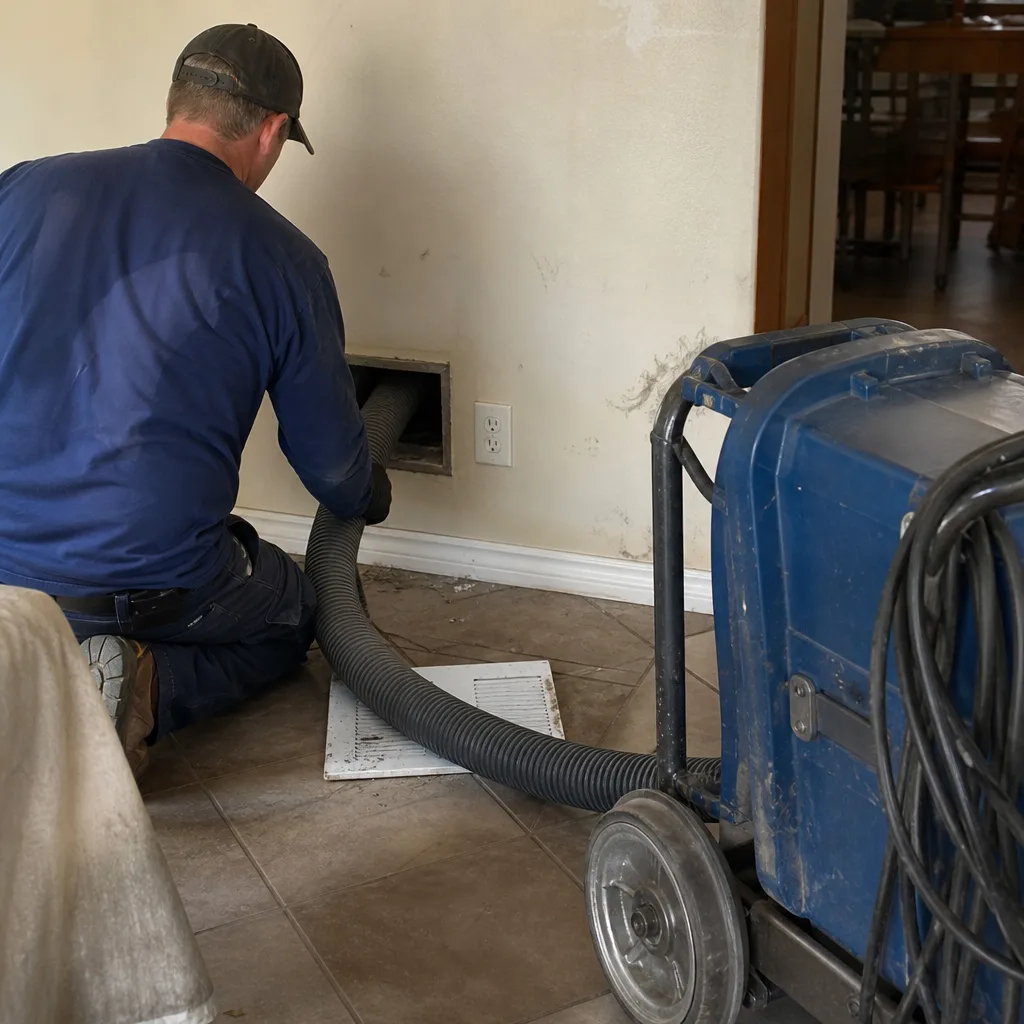 Before
 After
AfterThe Complete Guide to Air Duct Cleaning in Parker
The EPA has stated clearly that duct cleaning has never been proven to prevent health problems, yet the industry collects over $1 billion annually from homeowners who cannot verify what was actually done inside their walls. In Parker, where new construction in subdivisions like Reunion and Canterberry pumps drywall dust through fresh ductwork, and where Front Range wildfire seasons push particulate through systems for weeks, that gap between sales pitch and evidence costs homeowners hundreds of dollars for vacuum noise and a handshake. This guide-along with our DIY vs Professional Air Duct Cleaning: The Parker Homeowner’s Decision Guide-shows what a legitimate cleaning involves, what it costs in the Parker market, and what documentation you should hold in your hand when the truck leaves your driveway.
Quick Answer
A legitimate air duct cleaning in Parker typically costs $400-$900 for a standard single-system home and should include negative-pressure extraction of every supply run, return run, and main trunk line, plus a documented photo record of each. The work takes 3-5 hours for a thorough job and should never be priced per vent or performed without a written scope agreed to before any panel is removed.
Table of Contents
- What a Legitimate Air Duct Cleaning Actually Involves
- NADCA Standards vs. What $79-Coupon Companies Actually Do
- Parker-Specific Triggers: When Duct Cleaning Actually Matters
- What a Written Quote Should Include Before Work Starts
- What Before-and-After Photographs Should Actually Show
- Urgent vs. Not Urgent: The One Scenario That Cannot Wait
- Air Duct Cleaning Costs in Parker: A Line-by-Line Breakdown
- How to Choose a Technician You Can Verify
BeforeAfterWhat a Legitimate Air Duct Cleaning Actually Involves
Air duct cleaning is the mechanical removal of debris from the complete network of metal or flex ductwork that moves conditioned air through your home. A legitimate job addresses three distinct components: supply runs (the ducts that push heated or cooled air into rooms), return runs (the ducts that pull air back to the HVAC unit), and main trunk lines (the larger central channels that branch to individual runs).
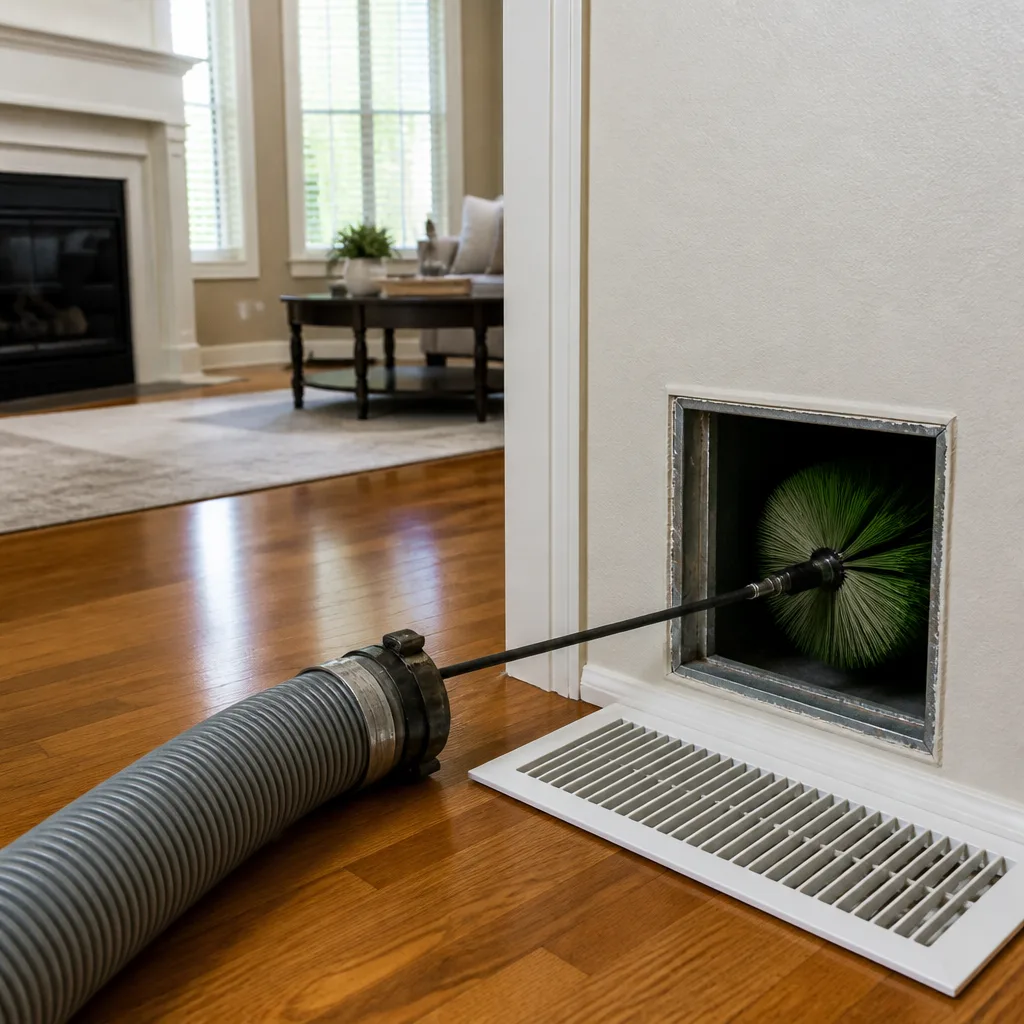
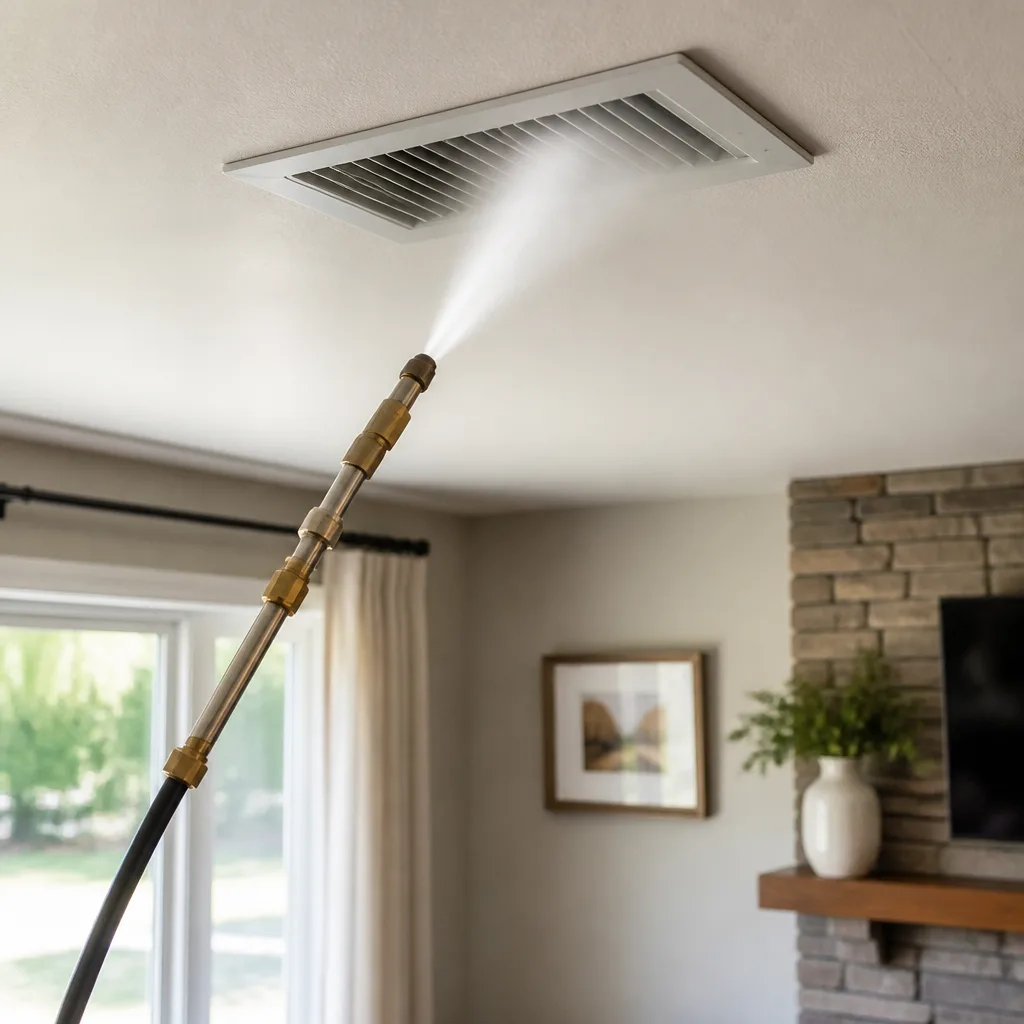
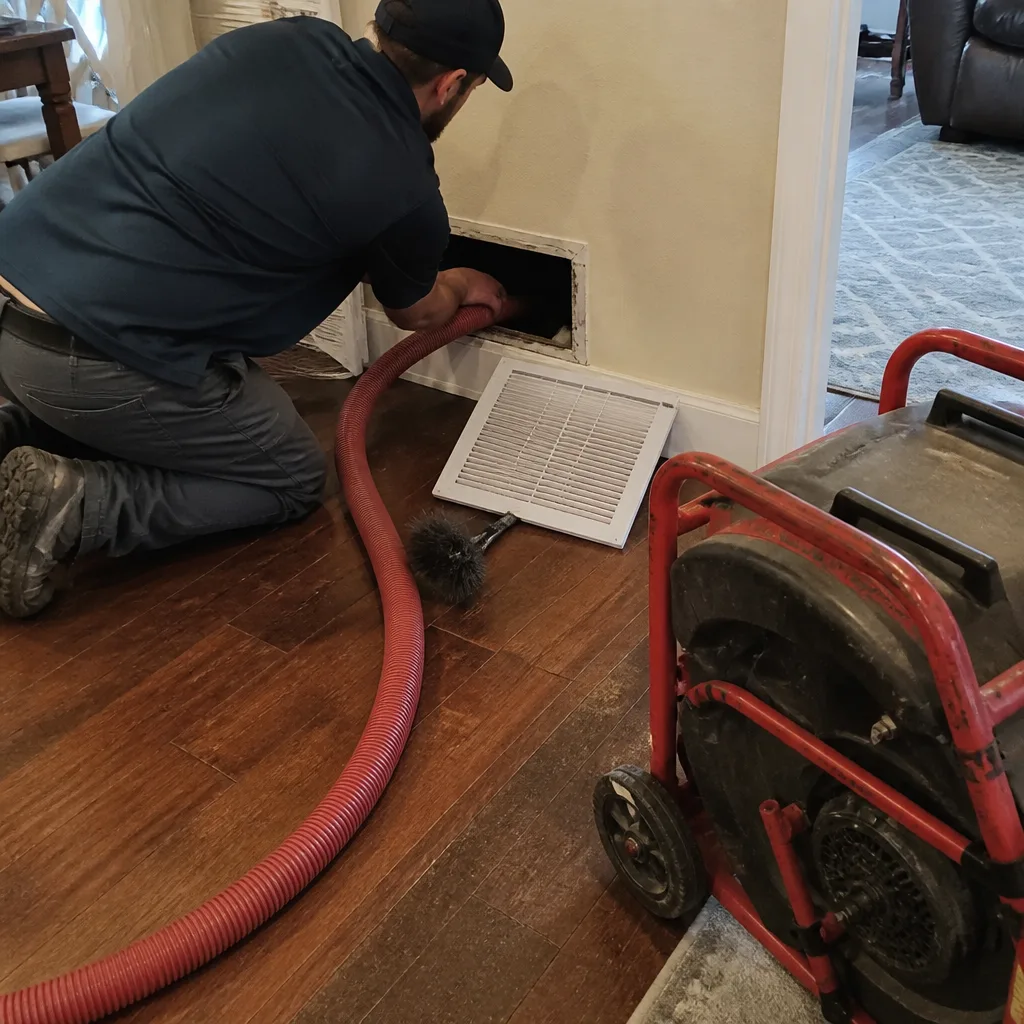
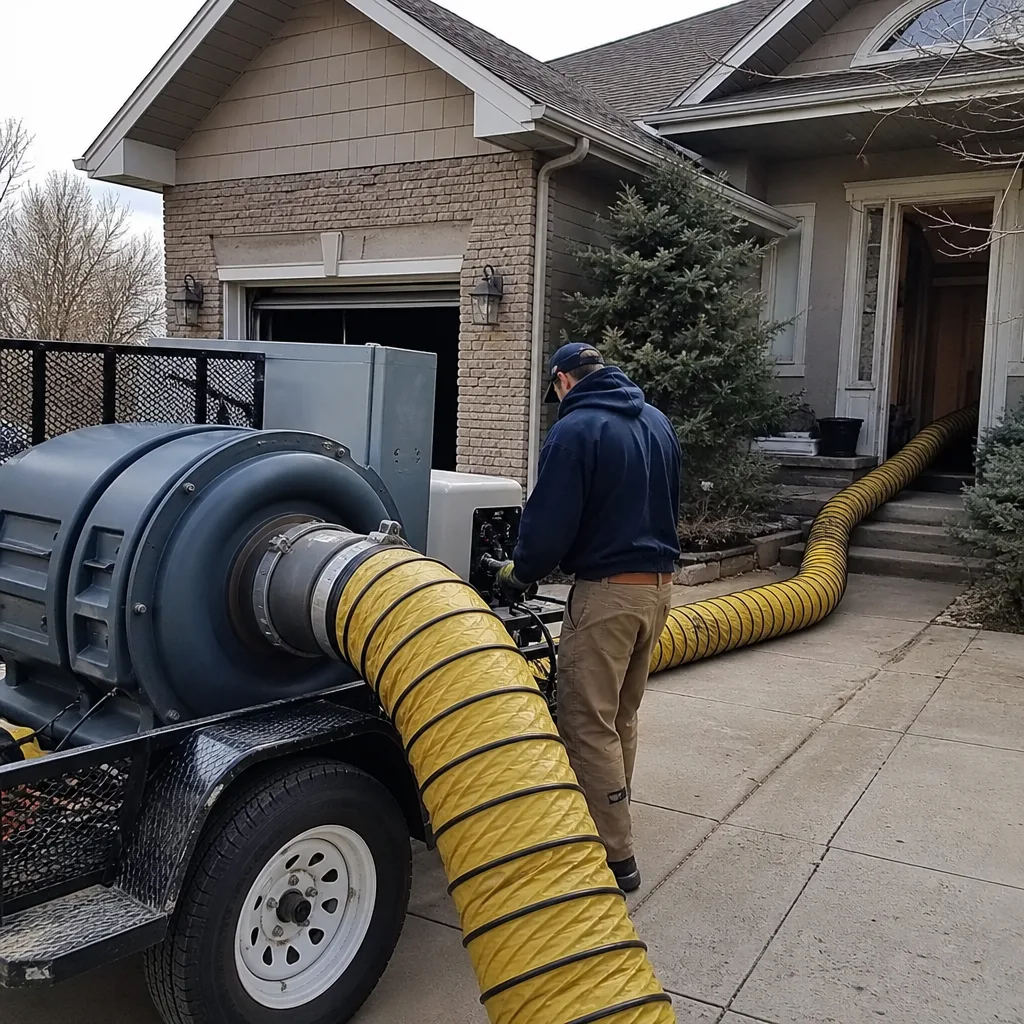
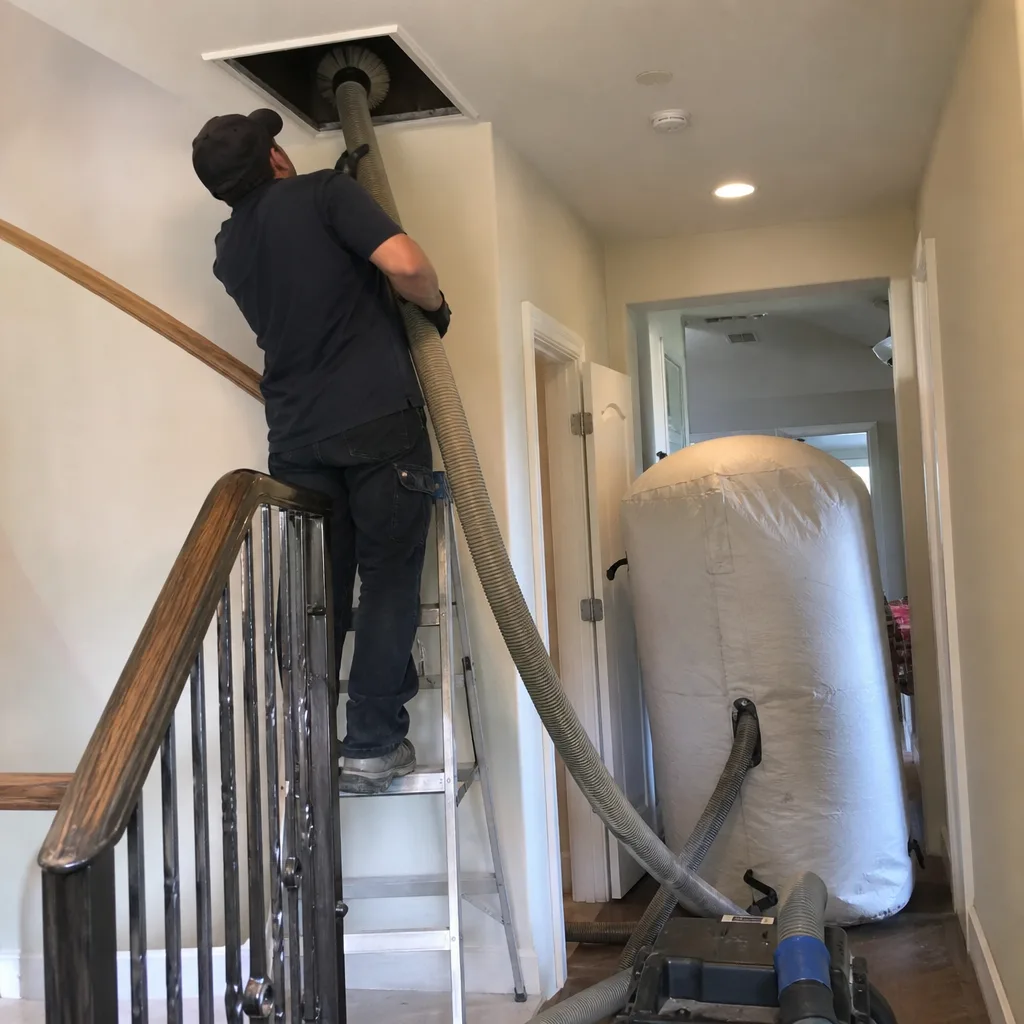
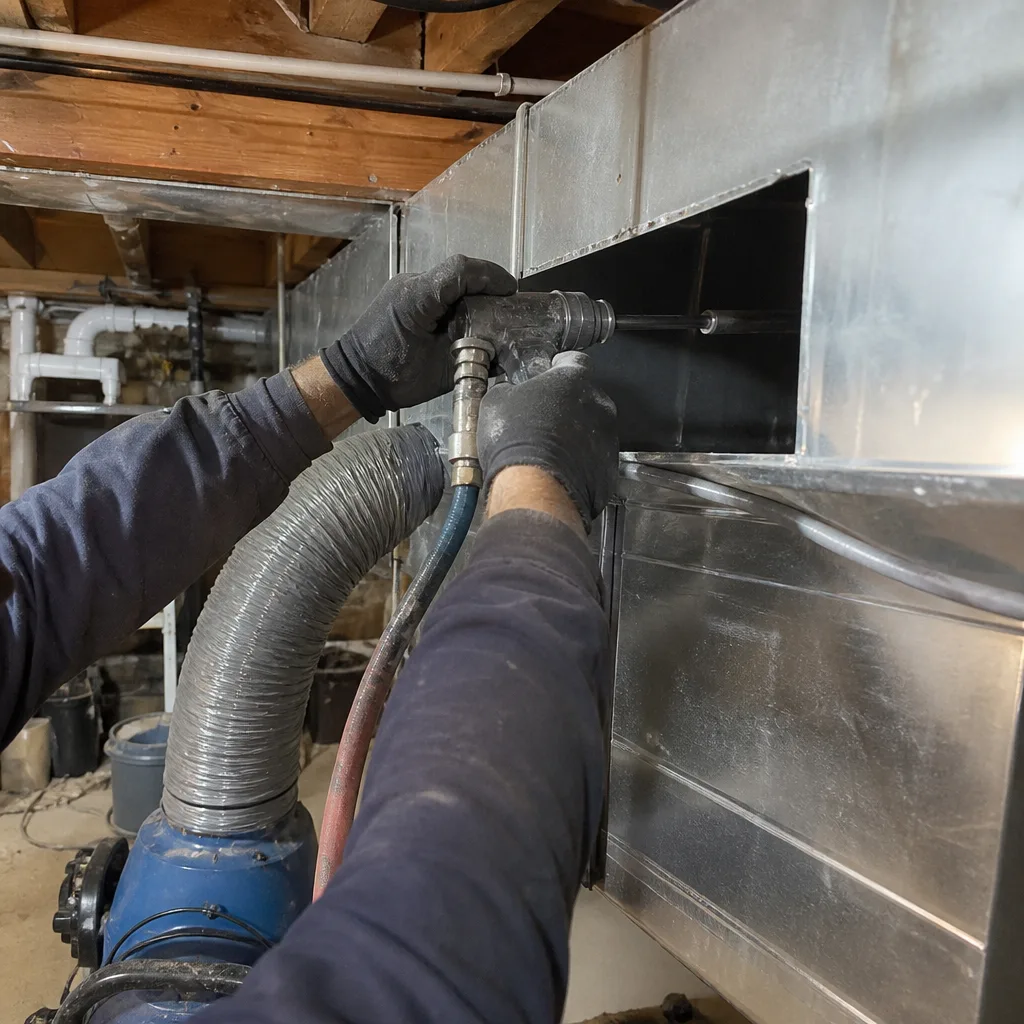
The core method is negative-pressure extraction. A large vacuum, typically mounted on a truck or as a portable unit, creates suction at the air handler or a central access point. This negative pressure prevents debris from escaping into living spaces during agitation. Technicians then use mechanical tools, compressed air whips, or rotary brushes to dislodge buildup at each register and along each run, allowing the vacuum to pull it out of the system entirely.
Key equipment you should expect to see named on any legitimate quote:
- Negative air machine: A high-volume vacuum that maintains suction across the entire duct network while individual runs are being cleaned. Portable units from Nikro or truck-mounted systems from Abatement Technologies are common in professional-grade operations.
- HEPA-filtered collection: The vacuum must exhaust through a HEPA filter rated to capture particles at 0.3 microns. Without this, fine dust recirculates into your home or the technician’s lungs.
- Agitation tools: Rotating brushes, compressed air whips, or skipper balls that travel through the ductwork to break debris free from interior walls. Rotobrush manufactures rotary brush systems widely used in residential applications.
- Access tools: Proper cutting and sealing of access panels in trunk lines, not removal of existing registers with a shop vacuum hose poked downward.
The job is not complete when the vacuum stops. A legitimate cleaning concludes with verification: photographs of each run showing identifiable debris before work begins and clear interior walls after. Without this documentation, you have purchased a service you cannot confirm was performed.
In Parker, where many homes built between 2015 and 2025 feature extended flex-duct runs in attics and crawl spaces, the physical access challenges are greater than in older homes with rigid metal ductwork. Longer runs require more agitation time and careful handling to avoid tearing or disconnecting sections. This is why flat-rate pricing per system, not per vent, matters: a home in Pradera with 18 vents and 150 linear feet of flex duct requires fundamentally different labor than a 1950s ranch with 8 vents and 40 feet of metal trunk.
NADCA Standards vs. What $79-Coupon Companies Actually Do
The National Air Duct Cleaners Association (NADCA) publishes the standard that legitimate technicians follow: ACR, the Assessment, Cleaning, and Restoration of HVAC Systems. It specifies that cleaning must address the entire HVAC system, not just visible registers, and requires mechanical agitation plus negative-pressure extraction. The standard also mandates that technicians protect the home, contain debris, and verify results.
Here is what NADCA requires and what the typical $79-coupon operation actually delivers:
| NADCA Requirement | Coupon Company Practice |
|---|---|
| Negative-pressure extraction across entire system | Shop vacuum or cordless unit with no negative pressure; debris pushed into ducts or living space |
| Mechanical agitation of every supply run, return run, and trunk line | Register vacuuming only; no trunk line access |
| Access panels cut and sealed in trunk lines | No trunk access; no cutting, no sealing |
| HEPA-filtered exhaust | Standard filter or no filtration; fine dust exhausted into home |
| Before-and-after documentation | No documentation; verbal assurance only |
| Written scope and price before work begins | Bait price; upsell on arrival for “mold” or “extra vents” |
The $79 price is mathematically impossible for a legitimate job. A single technician with proper equipment, traveling to your home in Parker, spending 3-5 hours on site, paying for fuel, insurance, equipment maintenance, and disposal, cannot operate at that price without either cutting every corner or converting the visit into a high-pressure sales opportunity.
At CleanRun, we’ve responded to homes in Stonegate and The Pinery where the customer paid a coupon price and received 45 minutes of register vacuuming. The trunk lines still contained construction debris from 2017. The customer had no photographs, no written scope, and no recourse. The $79 became $400 after the “mold inspection,” and the ducts remained dirty.
The equipment gap is verifiable. Ask any company what vacuum system they use. If they cannot name the manufacturer, if they say “commercial-grade” without a model, or if they arrive with a unit you could buy at a hardware store, the job will not meet NADCA standards. Professional-grade systems from Abatement Technologies or Nikro cost $15,000-$40,000; they are not portable shop vacuums with longer hoses.
Parker-Specific Triggers: When Duct Cleaning Actually Matters
Parker’s location on the Colorado Front Range creates three conditions that legitimately accelerate duct contamination beyond normal accumulation. These are not marketing angles; they are observable, measurable factors that affect what enters and remains in residential ductwork.
High-Altitude Dust Load
Parker sits at approximately 5,900 feet elevation in a semi-arid climate with low annual precipitation and high wind exposure. The surrounding terrain is predominantly grassland and exposed soil, particularly in developing areas. Wind events lift fine particulate that infiltrates homes through gaps in building envelopes, open windows during shoulder seasons, and the fresh air intakes on modern HVAC systems. This dust is finer and more abrasive than coastal or humid-climate particulate. It accumulates in ductwork faster than in comparable homes at lower elevations with more precipitation to settle airborne material.
In homes we’ve serviced near E-470 and in the expanding areas east of Jordan Road, we’ve documented 2-4 inch debris layers at return trunk elbows where velocity drops and particulate settles. The material is predominantly mineral dust, not organic matter. It does not decompose or compact; it accumulates until mechanically removed.
Wildfire Smoke Infiltration
Front Range wildfire seasons have extended in duration and intensity over the past decade. Smoke from fires in Jefferson County, Boulder County, and more distant sources produces fine particulate matter (PM2.5) that penetrates standard HVAC filtration. During severe smoke events in 2020, 2021, and 2024, Parker experienced multiple days of hazardous air quality index readings.
Standard 1-inch pleated filters capture larger particles but allow substantial PM2.5 through. Once in the duct system, this material adheres to existing dust layers, particularly in supply runs where temperature differentials create condensation cycles that bind particles to duct walls. The result is a soot-dust matrix that standard vacuuming does not remove. Agitation and negative-pressure extraction are required.
Homes with electronic air cleaners or high-MERV media filters still experience infiltration during filter changes, system cycling, and envelope leakage. The question is not whether smoke entered the ducts; it is whether the accumulated load justifies mechanical removal.
New-Construction Drywall Dust
Parker has experienced sustained residential construction, with active subdivisions in Reunion, Canterberry, and areas south of Hess Road. New construction ductwork is installed before drywall finishing, and despite temporary covers, fine gypsum dust enters the system. This material is particularly problematic because it is hygroscopic: it absorbs moisture from conditioned air, compacts into a hard layer on duct walls, and provides a substrate for later organic growth if humidity conditions allow.
We’ve photographed new-construction ducts in Parker where the interior surface appeared painted white with drywall residue. The builder’s “rough clean” had removed visible debris from registers but left the trunk lines coated. This is not a health emergency, but it is a legitimate reason for cleaning before occupancy, and it explains why some Parker homeowners detect dust generation from new systems that should be clean.
What a Written Quote Should Include Before Work Starts
Haven Standard Clause 1 requires a written price before any work begins. This is not a preference; it is a structural protection against the bait-and-switch that defines the coupon-cleaning industry. A legitimate quote for air duct cleaning in Parker should contain the following line items, each with a clear scope and price:
- Supply runs: The number of supply runs to be cleaned, with the method of access and agitation specified. Example: “12 supply runs, accessed at register and agitated with rotary brush under negative pressure.”
- Return runs: The number of return runs, which are typically fewer but larger in diameter and often more heavily loaded with debris. Example: “3 return runs, accessed at grille and trunk access panel, agitated with compressed air whip.”
- Main trunk lines: Supply and return trunk lines, which require cut access panels if not already equipped. The quote should state whether access panel installation and sealing is included. Example: “Supply trunk: 1 access panel cut, cleaned, sealed with gasketed cover. Return trunk: 1 existing access utilized.”
- Plenum and air handler cabinet: The plenum (the large duct section directly attached to your furnace or air handler) and the interior of the cabinet itself, where debris accumulates on the blower and coils.
- Register/grille cleaning: Whether floor, wall, or ceiling registers are removed, cleaned externally, and reinstalled.
- Sanitizing treatment: If offered, the specific product and application method. This should be optional, not bundled without consent.
- Documentation: Confirmation that before-and-after photographs of every run are included as a standard deliverable.
- Total price and payment terms: One flat price for the complete scope, with no per-vent add-ons or conditional charges.
The quote should also name the equipment to be used and the approximate duration of the work. A thorough cleaning of a typical Parker home with 12-16 vents requires 3-5 hours with a two-person crew. Quotes implying 90-minute completion times indicate register vacuuming, not system cleaning.
At CleanRun, the written quote is delivered before the technician enters the home. The customer reviews it, asks questions, and approves it in writing. No work begins until this is complete. This is not exceptional service; it is the minimum standard for a transaction where the customer cannot observe the work product without dismantling their own walls.
What Before-and-After Photographs Should Actually Show
Documentation is the only verification available for work performed inside sealed ductwork. A photograph is not proof by itself; it must contain specific elements to be meaningful. Here is what you should receive and how to evaluate it.
Camera Angle and Location
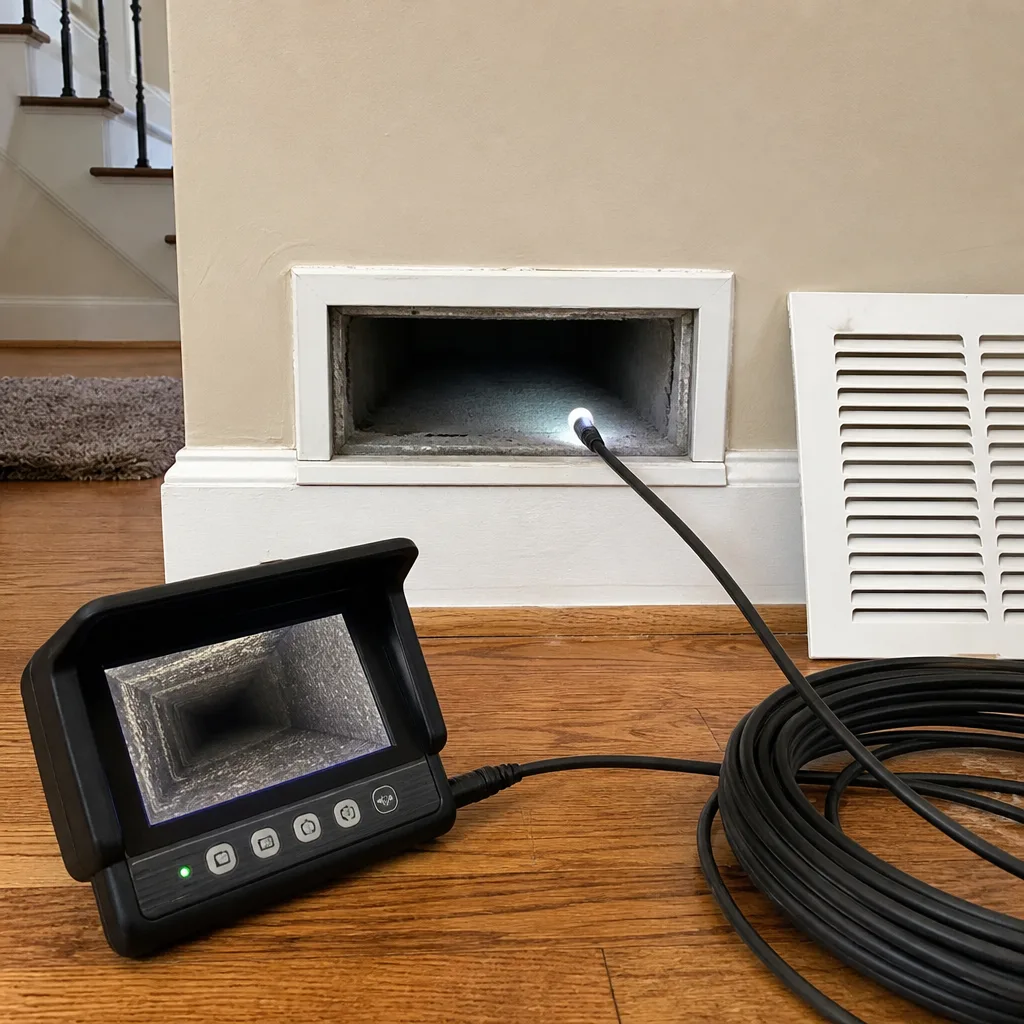
Each photograph should show the interior of a specific duct run from a consistent insertion depth, typically 2-4 feet past the register or access point. The image should include enough duct wall to establish scale and enough length to show the condition of the run, not just a close-up of debris at the opening. Before and after images must be from the same location, verifiable by duct wall features, joints, or construction marks.
Lighting
Duct interiors are dark. Meaningful photography requires a light source at the camera or a separate illumination tool. Images that are uniformly dark, flash-blown at the opening, or lit by ambient room light through the register are not documentation; they are placeholders. Professional operations use borescope cameras with integrated LED lighting designed for dark cavity inspection.
Identifiable Debris
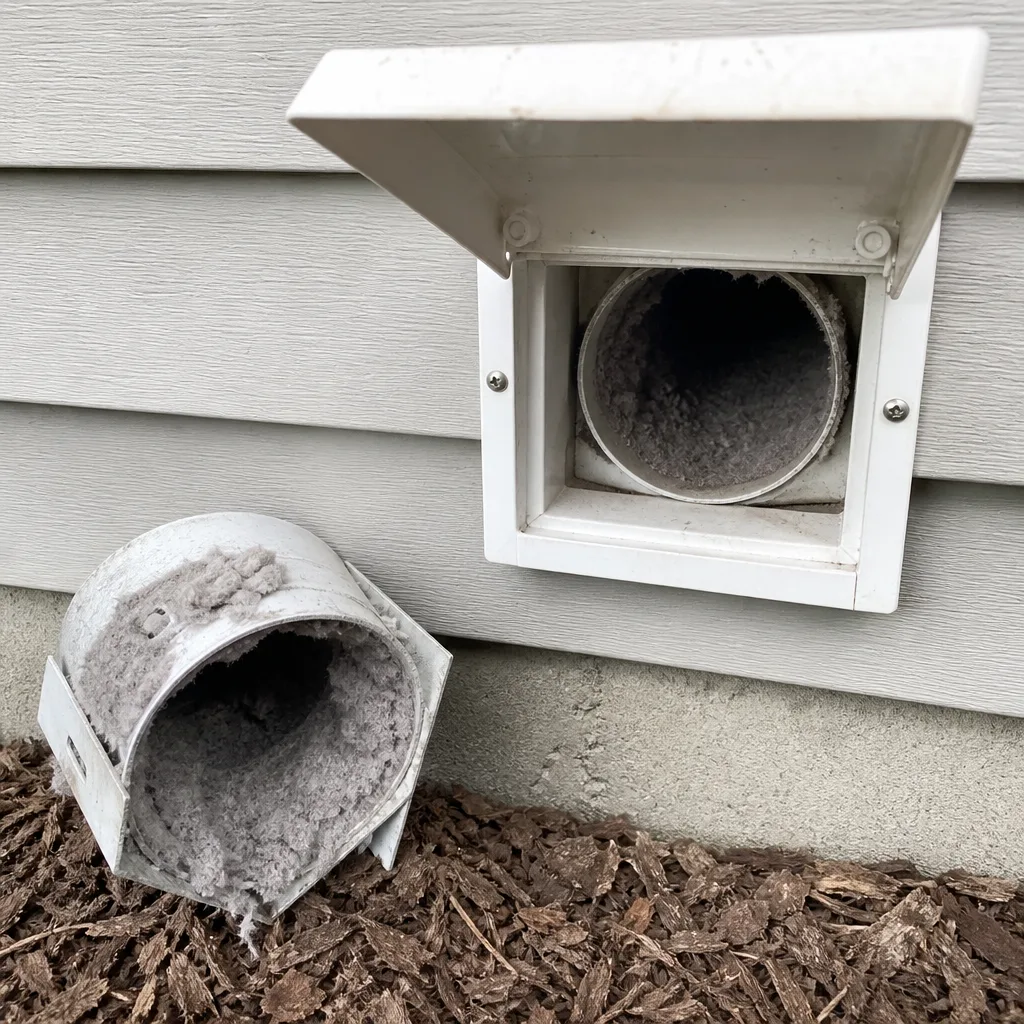
The before image should show material that is clearly debris: dust layers, construction residue, or particulate accumulation on duct walls. The after image should show the same surface with that material removed, not merely disturbed. Blurry images, images of register exteriors, or images where the “after” appears to be a different duct entirely are common deficiencies in coupon-company documentation.
Labeling and Organization
The photo record should be organized by location: “Master bedroom supply, north wall,” “Kitchen return, east wall,” etc. A random collection of unlabeled images is difficult to correlate with the actual ductwork in your home. The documentation should be delivered as a digital file or printed record that you retain.
At CleanRun, the Documented Photo Record is standard on every visit. Since our first job in 2013, we’ve photographed the interior of every duct run before and after cleaning. The customer receives this record as part of the job documentation, along with the written scope and the written warranty. It is not an upgrade or an add-on. The difference between real work and vacuum noise is visible in these images, which is precisely why some competitors do not provide them.
Urgent vs. Not Urgent: The One Scenario That Cannot Wait
Most air duct cleaning is maintenance, not emergency. Three common scenarios are frequently presented as urgent but are not:
- Routine “every 3-5 years” cleaning: The EPA does not recommend scheduled duct cleaning; it recommends cleaning as needed based on visible contamination or system performance issues. The “every 3-5 years” rule originated with industry marketing, not health agencies.
- Normal dust accumulation: Some dust in ducts is normal and does not affect system performance or indoor air quality. Cleaning provides aesthetic and potential efficiency benefits, but it is not health-critical.
- Post-illness or allergy concerns: Duct cleaning has not been proven to reduce allergy symptoms or prevent illness. HEPA filtration and source control (reducing indoor pollutants) are more effective interventions.
The one scenario that genuinely cannot wait is verified mold growth or post-renovation contamination that is actively distributing material through the system.
Verified mold means laboratory-confirmed growth on duct interior surfaces, not a technician’s visual claim of “mold-like staining.” If mold is confirmed, cleaning must address the source of moisture that enabled growth, or the problem returns. This may involve HVAC repair, humidity control, or building envelope work beyond duct cleaning.
Post-renovation contamination is urgent when construction debris includes hazardous materials (lead paint, asbestos-containing materials in older homes) or when fine particulate is actively blowing from registers into occupied spaces. In Parker’s active construction zones, we’ve documented drywall dust, insulation fragments, and wood particles in new-system ductwork that the builder’s cleanup missed. This material is abrasive to blower motors and irritating to occupants. Cleaning should occur before sustained occupancy.
If you suspect either condition, do not schedule a standard cleaning without inspection. A borescope evaluation of representative runs determines whether contamination is present and whether standard cleaning is appropriate or if remediation protocols are required.
Air Duct Cleaning Costs in Parker: A Line-by-Line Breakdown
Based on our pricing and market observation in the Parker area, here are the cost ranges for legitimate air duct cleaning services. These are whole-system prices, not per-vent teaser rates, and they assume a standard single-furnace home.
| Service Component | Typical Parker Range |
|---|---|
| Standard residential system cleaning (12-16 vents, single furnace) | $400-$700 |
| Larger home or complex system (17-24 vents, dual zones, extended trunk lines) | $650-$900 |
| New-construction initial cleaning (drywall dust, construction debris) | $500-$800 |
| Post-renovation cleaning (verified debris load, possible hazardous material) | $600-$1,000+ |
| Sanitizing treatment (optional, per system) | $75-$150 |
| Dryer vent cleaning (bundled with duct cleaning) | $100-$200 |
| Main trunk line access panel (if none exists, per panel) | $50-$100 |
Prices vary based on home size, duct accessibility (crawl space vs. basement), and contamination level. The critical distinction is not the exact dollar figure but the pricing structure: one flat price per system, agreed in writing, with all components enumerated. Per-vent pricing invites manipulation; a technician who discovers “extra vents” mid-job has a financial incentive to find more vents than your home contains.
CleanRun’s Air Duct Cleaning services follow Haven Standard Clause 1: written price before work starts, no exceptions. We do not offer coupons, teaser rates, or time-limited specials. The price we write is the price you pay, and it includes the Documented Photo Record and the 365-Day Done Right Promise.
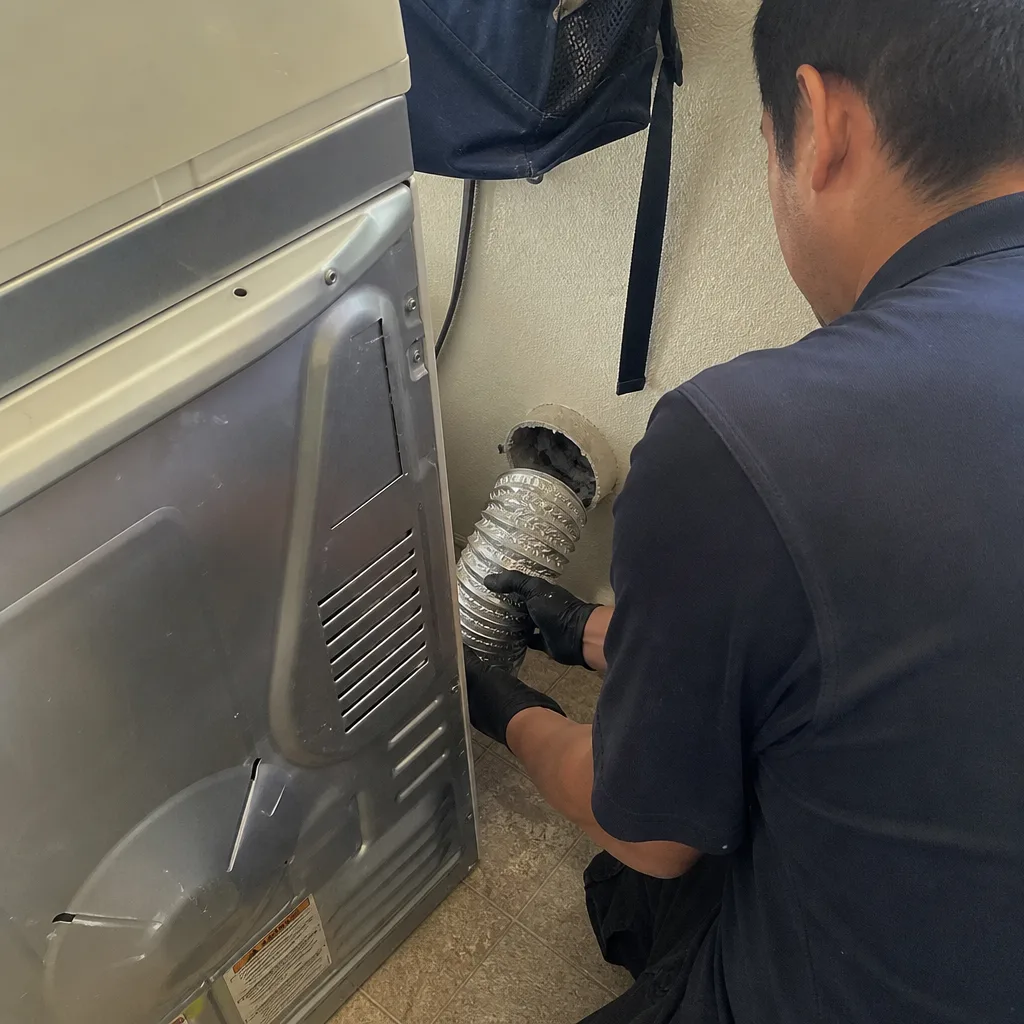
For comparison context, our Dryer Vent Cleaning in Parker service is frequently bundled with duct cleaning and addresses a separate fire-safety issue with its own pricing structure.
How to Choose a Technician You Can Verify
The technician who enters your home will work inside walls you cannot see, with equipment you may not recognize, and will ask you to trust that the work was done correctly. Verification before hiring is your only protection. Here is what to confirm:
- License and insurance status: Colorado requires no specific duct-cleaning license, but legitimate operations carry general liability insurance and workers’ compensation. Ask for certificate of insurance; do not accept verbal confirmation.
- Equipment specifics: Ask what vacuum system and agitation tools will be used. Name brands you can research, such as Rotobrush, Nikro, or Abatement Technologies, indicate professional-grade investment. Vague claims of “commercial equipment” do not.
- Documentation commitment: Ask whether before-and-after photographs of every run are included, how they are delivered, and whether you can see examples from previous jobs. Refusal or deflection is a significant signal.
- Pricing structure: Ask whether the quote is flat-rate per system or per vent. Per-vent pricing is a bait-and-switch structure. Flat-rate with enumerated components is transparent.
- Crew verification: Ask whether technicians are background-checked, uniformed, and identified by name before arrival. Haven Standard Clause 3: Verified Crews requires this; it is not a premium feature.
- Written guarantee: Ask for the specific language of any satisfaction guarantee or warranty. “Satisfaction guaranteed” without written terms is meaningless. The 365-Day Done Right Promise at CleanRun is backed in writing on every job, not stated in marketing copy and subject to manager discretion.
In Parker, where many service companies operate from Denver or Aurora with varying commitment to the local market, technician consistency matters. Ask whether the same company performs the work or whether it is subcontracted. Subcontracting is not inherently problematic, but it complicates accountability if documentation is incomplete or damage occurs.
Our HVAC Cleaning in Parker page details the full system cleaning that extends beyond ducts to coils, blowers, and cabinets, performed by the same verified crews.
Common Mistakes to Avoid
- Booking by price alone in Parker: The $79-$99 coupon is structurally designed to upsell. In the Parker market, legitimate whole-system cleaning costs 4-6 times that amount. The coupon price covers travel and 45 minutes of register vacuuming, not system cleaning.
- Accepting verbal mold claims: A technician who claims to see mold without laboratory confirmation is selling fear, not service. Mold in ducts is rare in Colorado’s dry climate; staining from dust, rust, or adhesive is common and benign.
- Ignoring the photo record: If a company offers no documentation or provides images you cannot interpret, you have no verification. Demand clear, labeled, location-specific before-and-after photographs.
- Scheduling cleaning without addressing the source: If ducts are contaminated by ongoing issues, unsealed construction, or moisture intrusion, cleaning is temporary. The source must be identified and corrected first.
- Confusing duct cleaning with filter replacement: A clean 1-inch pleated filter changed every 60-90 days does more for air quality than duct cleaning. Do not substitute one for the other.
- Failing to verify trunk line access: If your home has no existing access panels in main trunk lines, cleaning without cutting them is incomplete. Confirm that access panel installation is included in the scope.
- Overlooking the return side: Return ducts are typically more heavily loaded than supply ducts because they pull unfiltered room air. A quote that emphasizes supply runs without specifying return trunk cleaning is incomplete.
When to Call a Professional
Call a professional when you can verify contamination through inspection or when post-construction or post-renovation conditions make it likely. Visible dust emission from registers, reduced airflow at distant vents, or documented debris during filter changes are observable indicators. Do not call because of a scheduled interval or a coupon in your mailbox; see more guides & resources for when service is truly warranted.
CleanRun Air Duct Cleaning Parker offers free estimates in Parker. We provide a written scope and price before any work begins, include a Documented Photo Record of every duct run, and back every job with the 365-Day Done Right Promise. Our technicians are background-checked, uniformed, and identified by name before arrival, operating under the H.A.V.E.N. Standard. Call (719) 259-4520 to schedule an estimate or to request a Free Second Opinion on any written estimate you’ve received from another company.
Frequently Asked Questions
A legitimate whole-system cleaning in Parker typically ranges from $400 to $900 for a standard single-furnace home, depending on vent count, duct accessibility, and contamination level. New-construction or post-renovation cleaning may run higher due to debris load. Call (719) 259-4520 for a written estimate with no per-vent pricing.
Low quotes typically cover register vacuuming only, not full system cleaning with negative-pressure extraction and trunk line access. The $79-$99 price point cannot cover labor, equipment, and disposal for a 3-5 hour job; it is designed to enable upselling on arrival. A written quote that enumerates every supply run, return run, and trunk line is the only way to compare prices accurately.
Demand a documented photo record showing the interior of every duct run before and after cleaning, with location labels and consistent camera angles. Without this, you have purchased a service you cannot verify. At CleanRun, this documentation is standard on every visit, delivered as part of the job record.
The EPA does not recommend scheduled cleaning intervals. Clean when you observe visible contamination, experience reduced airflow, or after construction or renovation that introduced debris into the system. In Parker’s high-dust, wildfire-exposed environment, some homes benefit from inspection every 3-5 years to assess accumulation, but cleaning is performed only when justified.
Duct cleaning has not been proven to prevent health problems or reduce allergy symptoms. Source control, HEPA filtration, and humidity management are more effective interventions. Cleaning may reduce circulating dust and improve system efficiency, but it is not a medical treatment.
Look for written upfront pricing, named professional equipment, background-checked and uniformed technicians, and a documented photo record included as standard. Ask for specific brand names, license verification, and the exact language of any guarantee. In Parker, where companies range from established local operations to traveling coupon services, verification before hiring protects against bait-and-switch tactics.
The Bottom Line
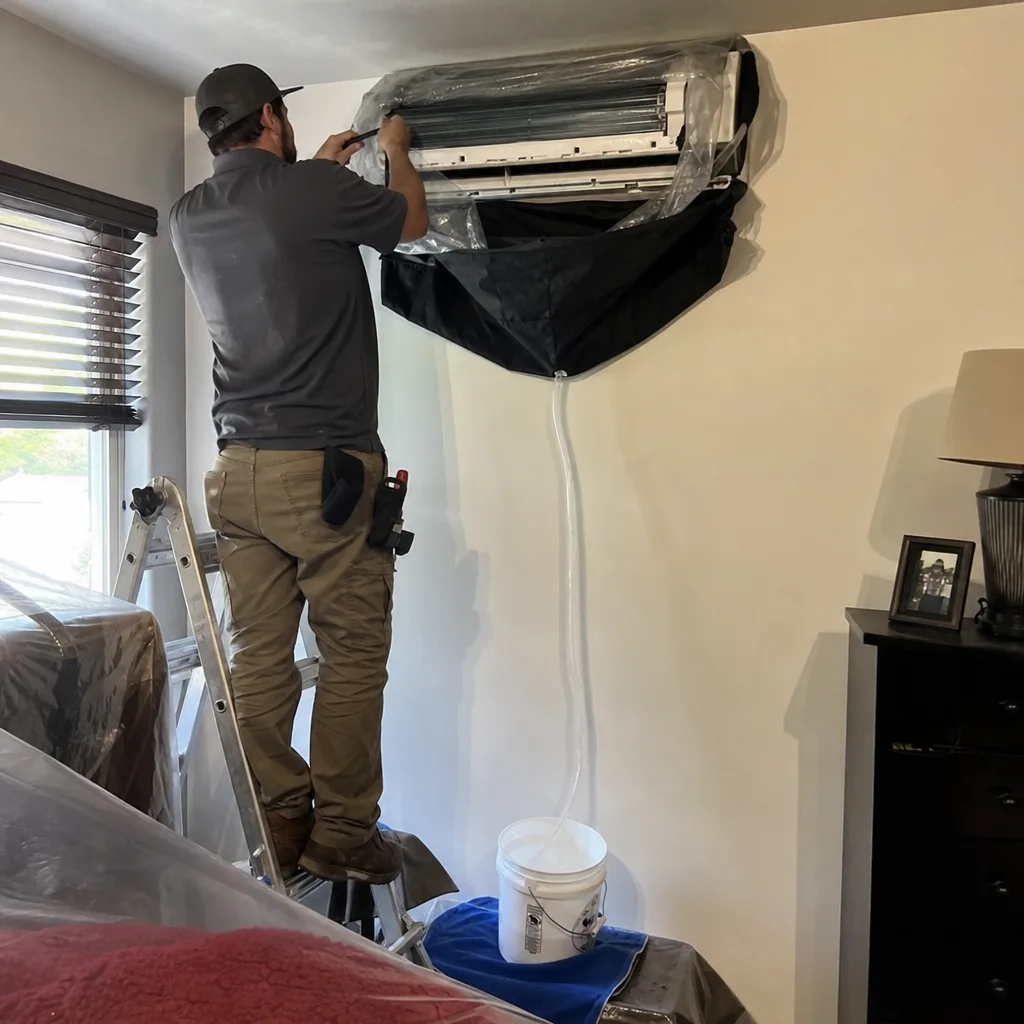
Air duct cleaning in Parker is a legitimate service that is frequently performed illegitimately. The gap between NADCA standards and coupon-company practice is wide, and the homeowner’s only protection is documentation: a written scope and price before work starts, and photographic proof of every duct run when the crew leaves. Most Parker homes do not need cleaning on a fixed schedule, but when construction debris, wildfire smoke accumulation, or verified contamination justifies the work, the difference between a documented cleaning and a performed one is visible in the photographs. Ask specific questions, demand specific answers, and do not pay for services you cannot verify.
Written by Tomas Reyes, Owner at CleanRun Air Duct Cleaning Parker, serving Parker since 2013.