
Last updated September 23, 2026
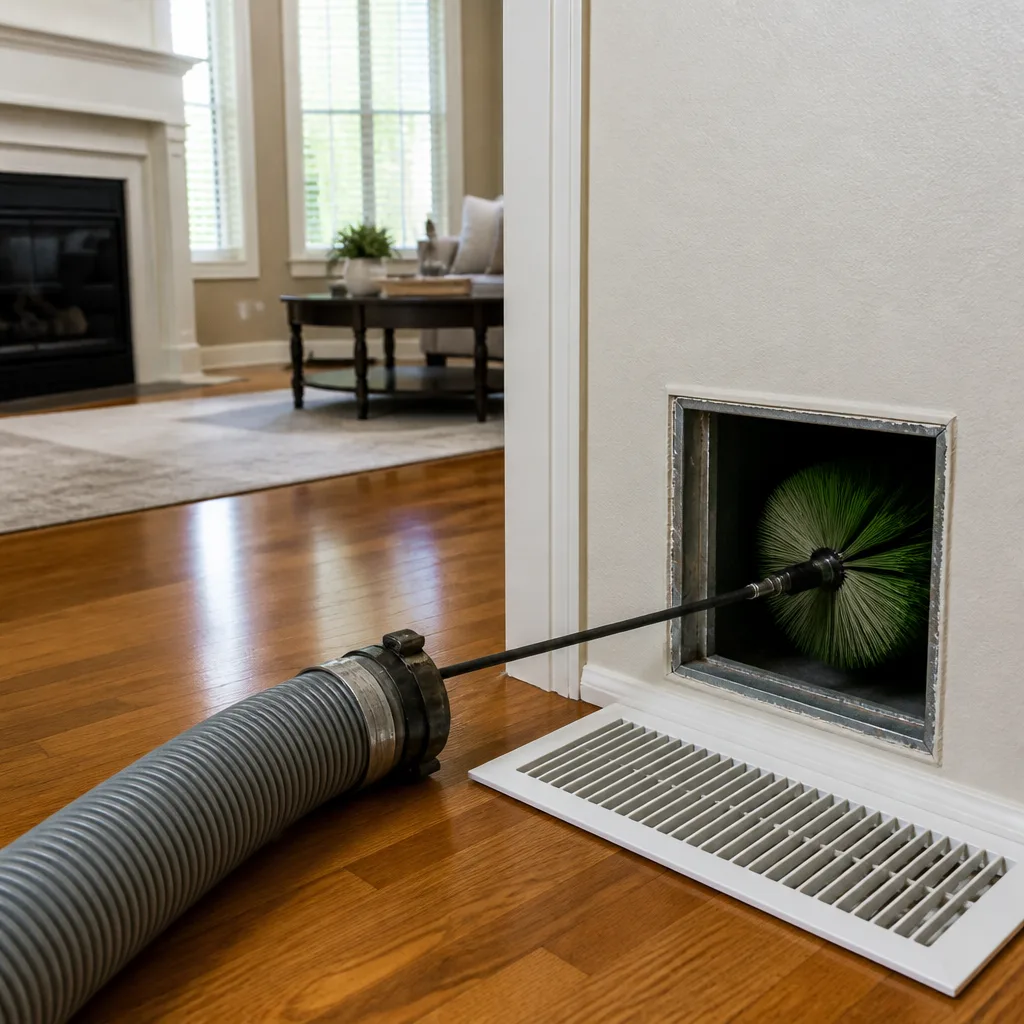
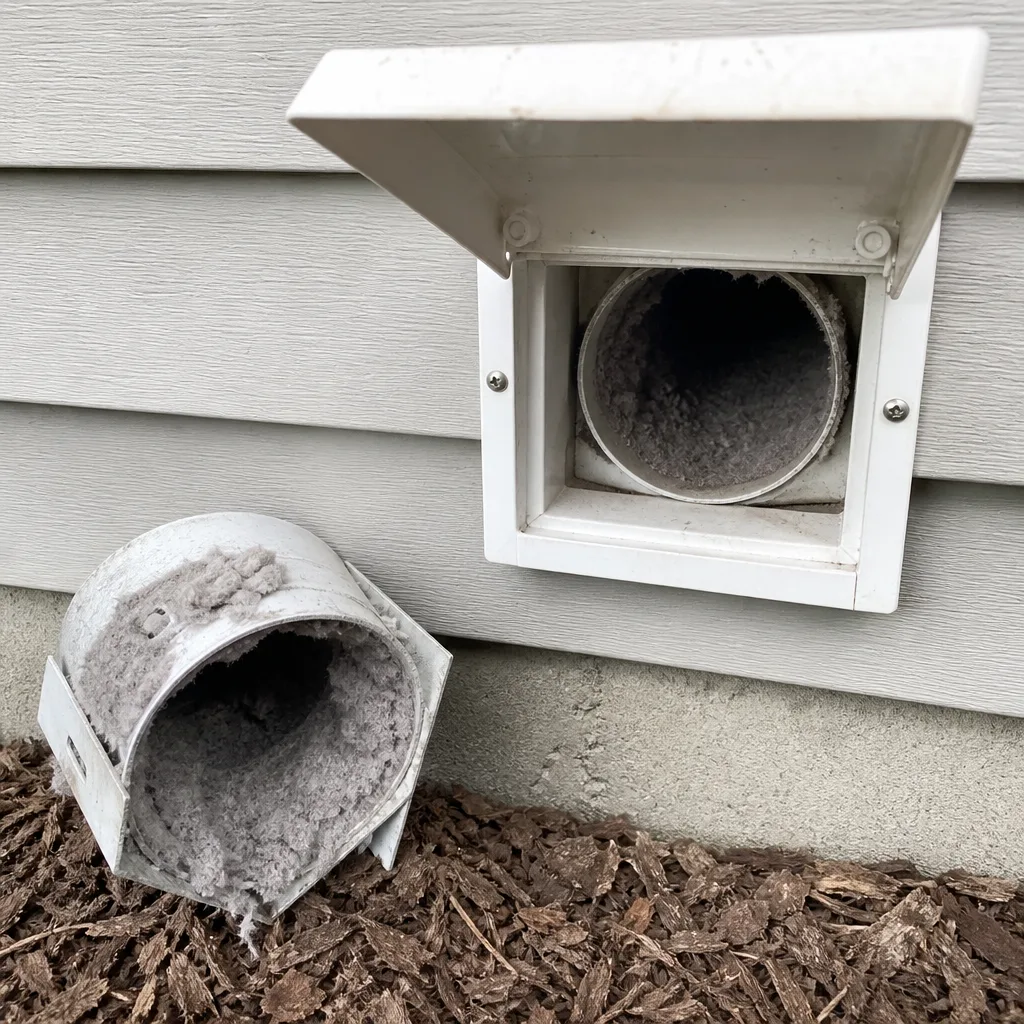
Whole-system duct and dryer vent check with before-and-after photos - you see exactly what came out of your vents
That "$99 whole-house special" is a bait ad - the real number appears once they are in your hallway, or the "clean" is a shop-vac at the register. We photograph the inside of your ducts before and after instead.
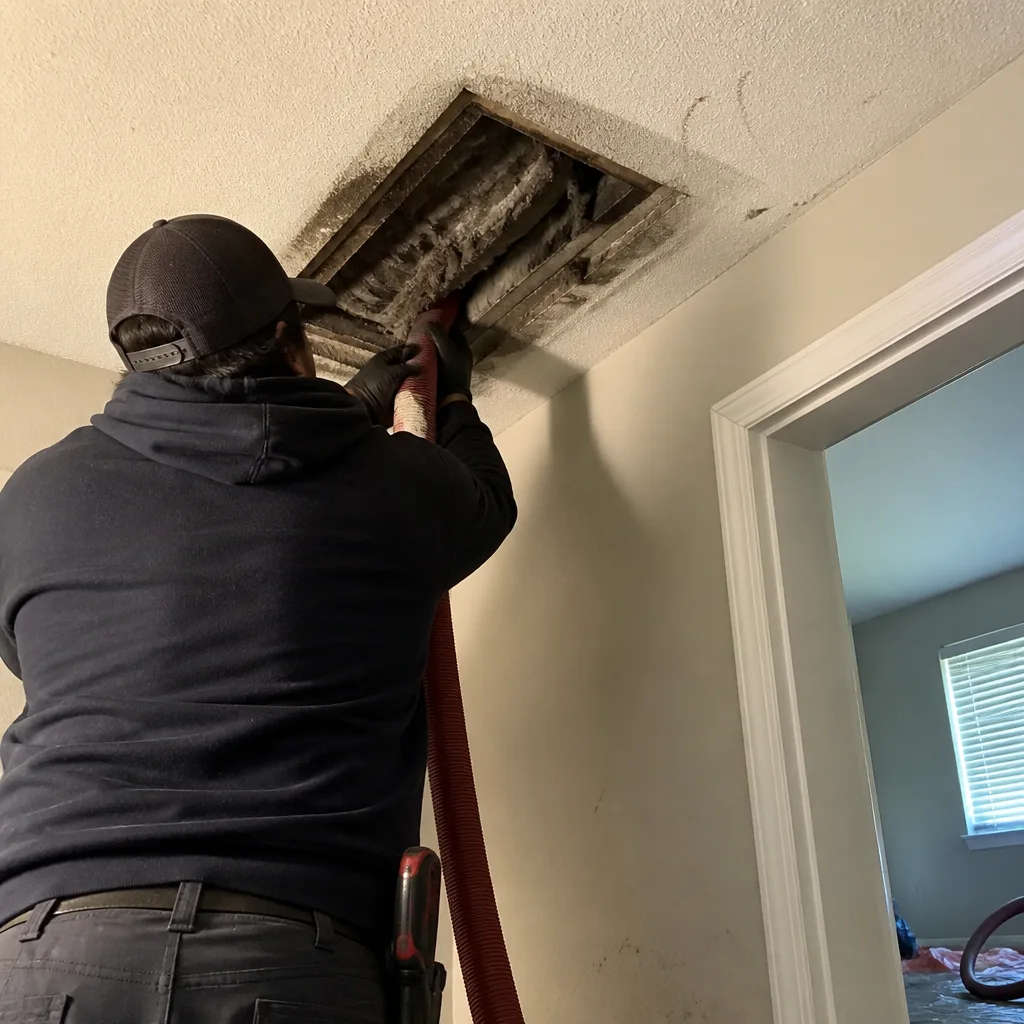 Before
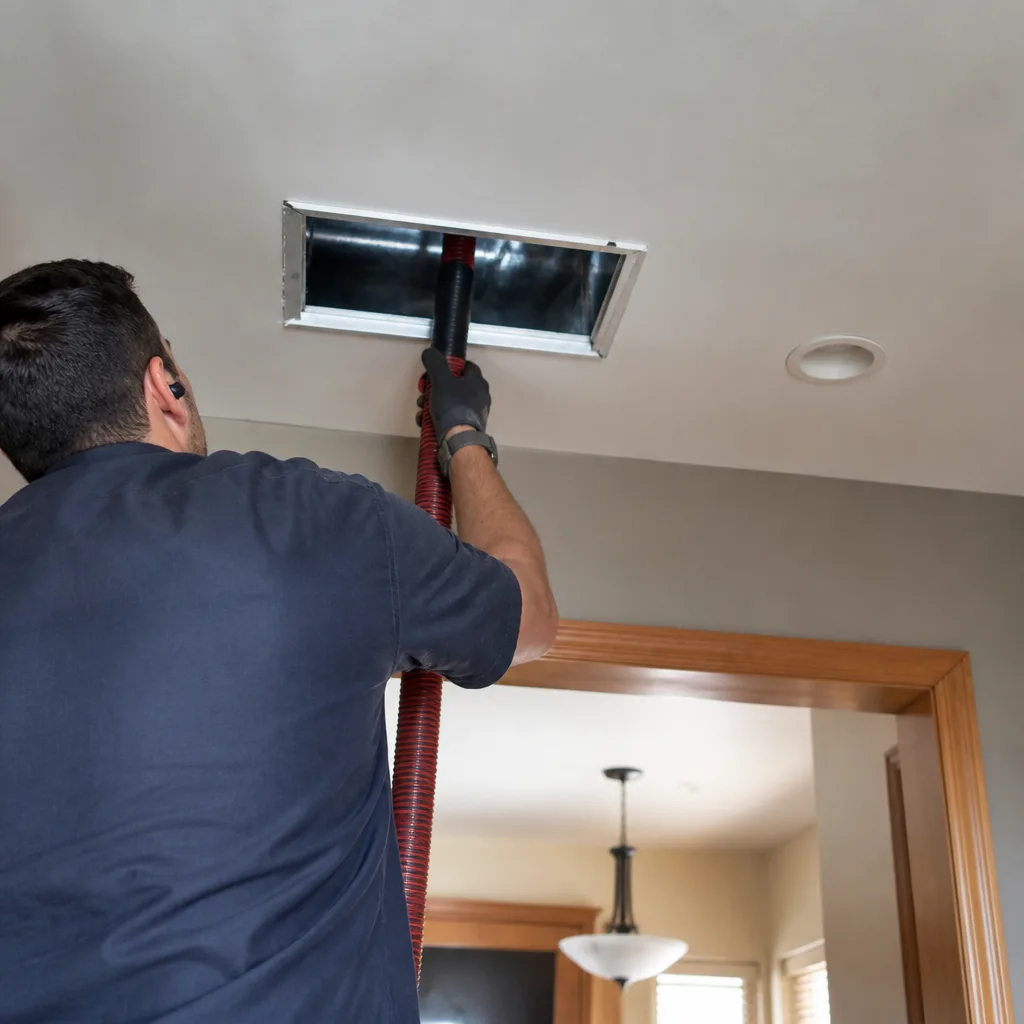 After
After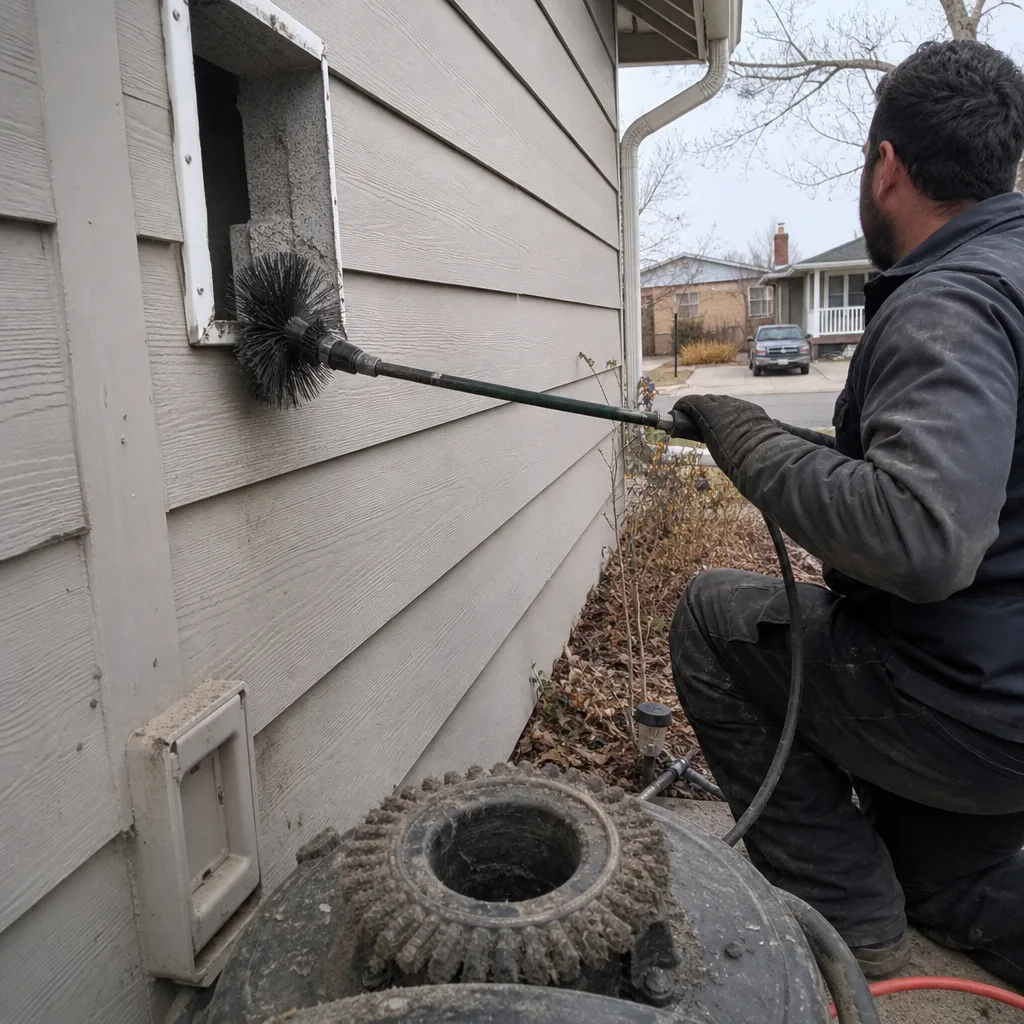 Before
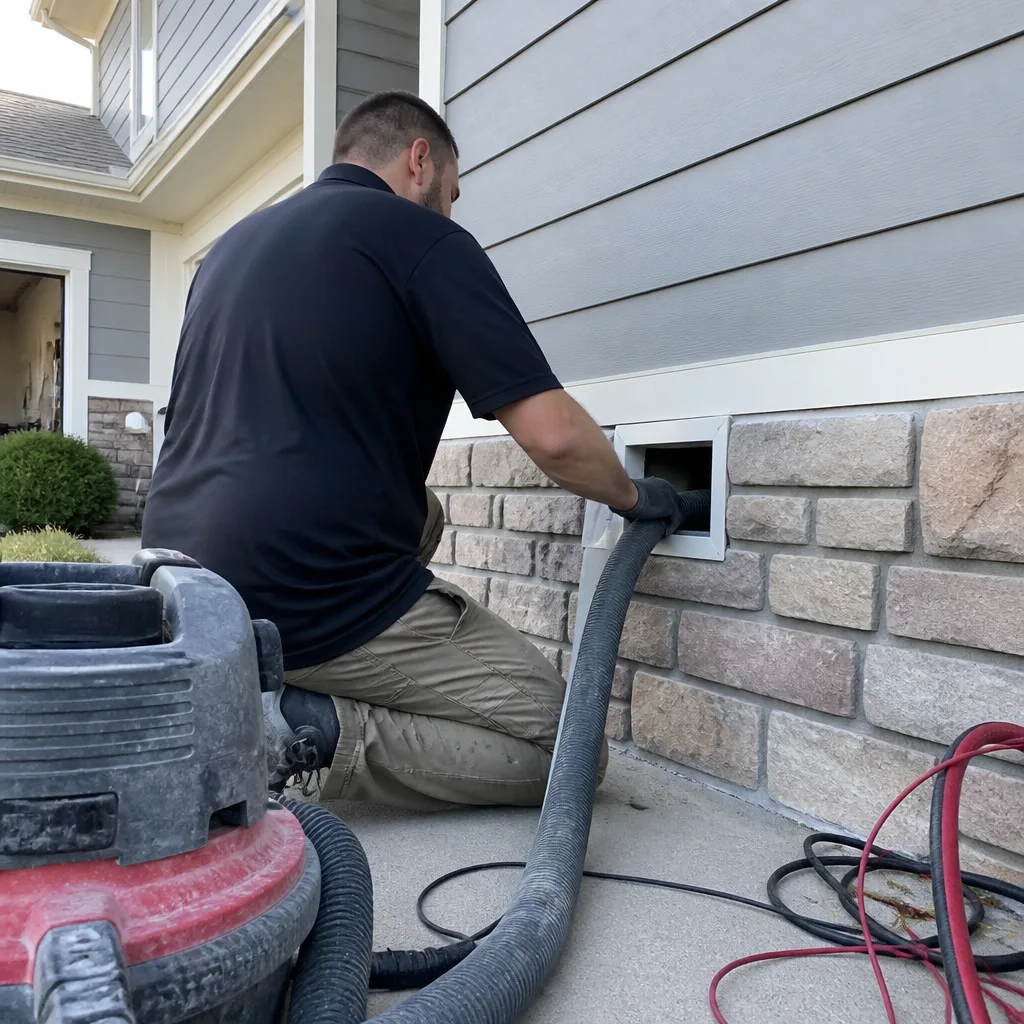 After
After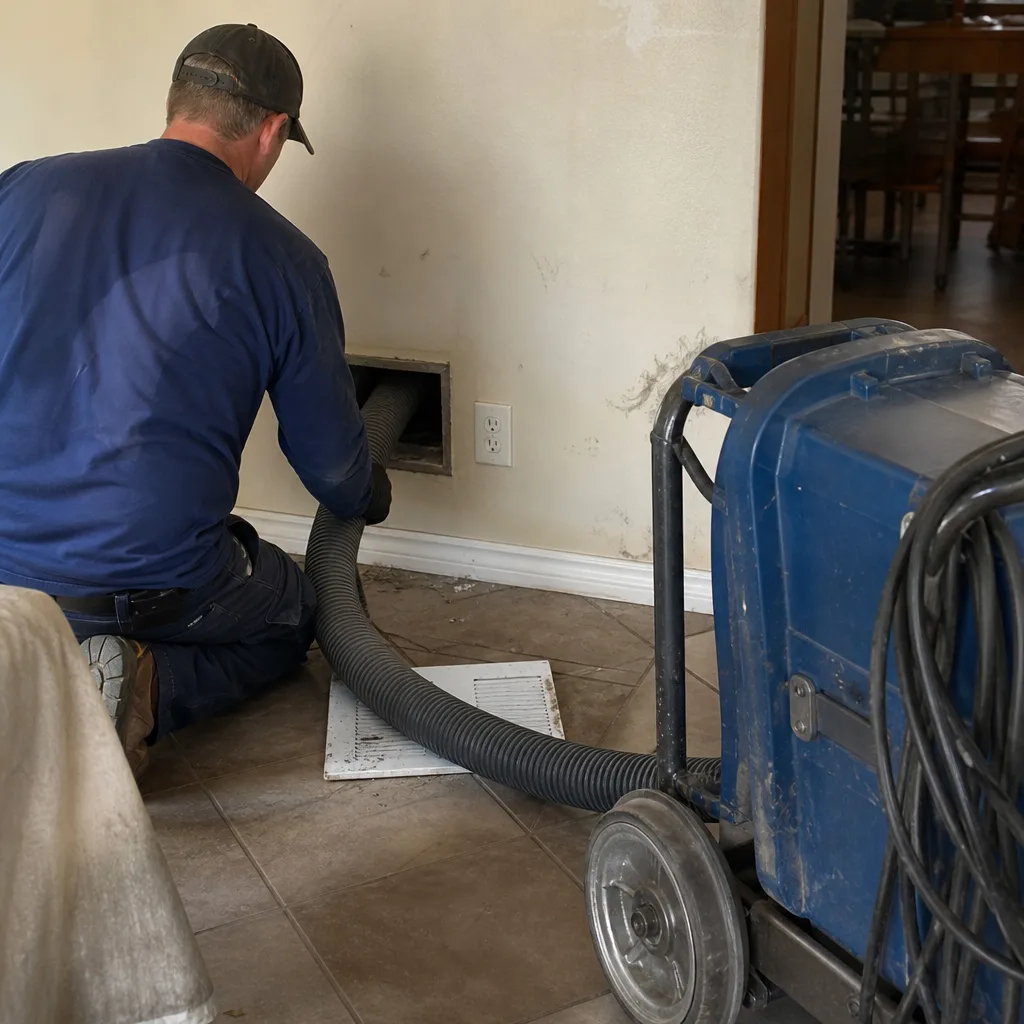 Before
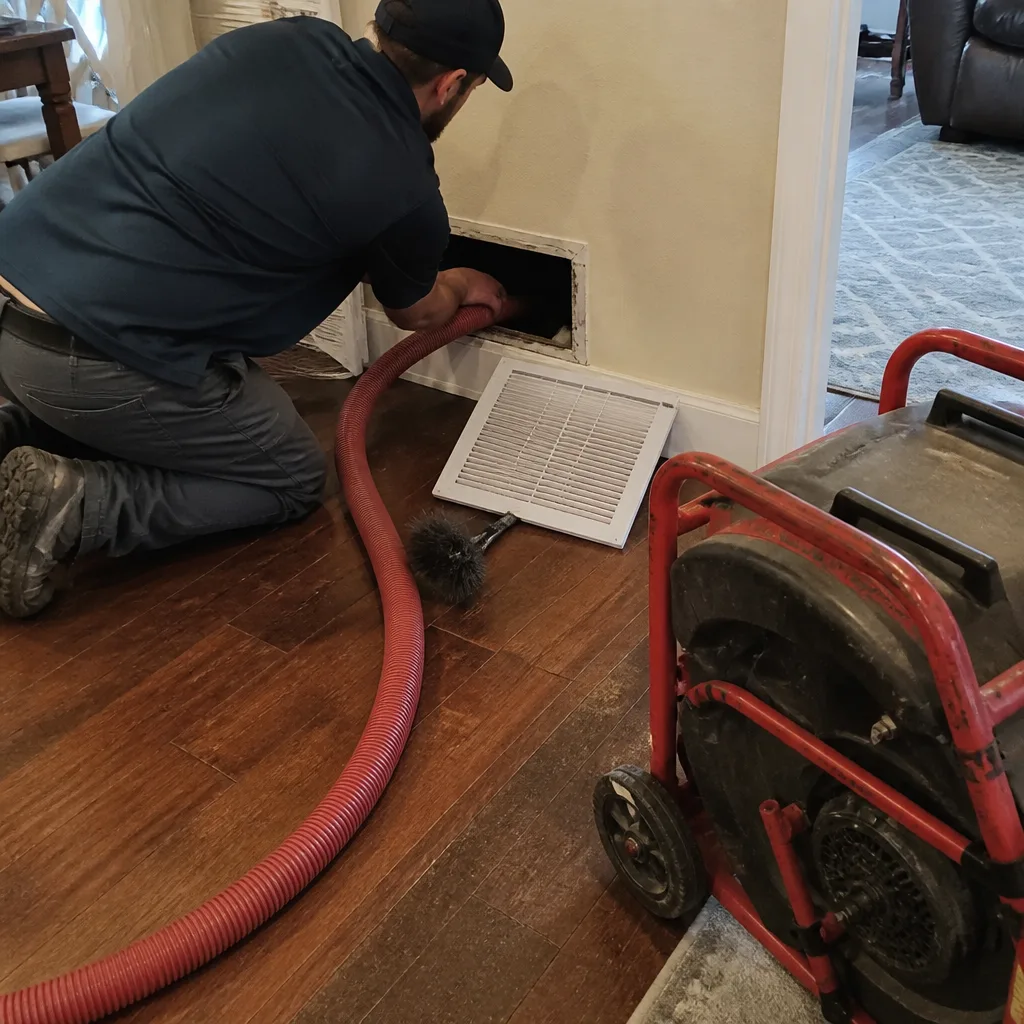 After
AfterDIY vs Professional Air Duct Cleaning: The Parker Homeowner’s Decision Guide
The most popular DIY duct cleaning approach - a household vacuum with a long hose attachment pushed into a register - creates negative pressure at the opening and positive pressure further into the duct. Debris that wasn’t moving is now moving toward your living spaces. It is the mechanical opposite of what professional equipment does. In this guide, we’ll show Parker homeowners exactly where the line falls between what you can handle yourself and what requires professional negative-pressure extraction, with real equipment costs, real time commitments, and the specific scenarios where DIY actively makes things worse. For more guides & resources, see our full library.
Quick Answer
DIY air duct cleaning is effective for return grille washing, filter maintenance, and visual inspections of accessible duct openings, but it cannot clean inside duct runs themselves. Professional Air Duct Cleaning services in Parker costs $350-$500 for a complete system and uses truck-mounted negative-pressure machines that pull debris toward collection equipment, not toward your rooms. The decision comes down to scope: surface tasks are yours; anything inside the ductwork requires professional-grade extraction and documentation.
Table of Contents
- What DIY Can Actually Do: Four Tasks That Work
- Why Consumer Tools Fail Inside Duct Runs
- Real Cost Comparison: DIY vs Professional in Parker
- Parker Scenarios Where DIY Never Works
- What Professional Equipment Actually Does
- Documentation DIY Cannot Produce - And Why It Matters
- Common Mistakes to Avoid
- When to Call a Professional
- Frequently Asked Questions
BeforeAfterWhat DIY Can Actually Do: Four Tasks That Work
There is a narrow band of duct maintenance that consumer equipment handles well. We have documented thousands of Parker homes since 2013, and in every case, these four tasks are within homeowner capability. The key is knowing where to stop.
1. Return Grille Removal and Washing
Return grilles - the larger, unlouvered covers on walls or ceilings where air is drawn back to the HVAC unit - collect the most visible debris. Remove the grille (usually two screws), wash it in warm water with mild detergent, and let it dry completely before reinstalling. In Parker, where cottonwood fluff peaks in late May and early June, we see grilles in neighborhoods like Stonegate and Bradbury Ranch clogged with seed fiber that a simple wash removes entirely. This is legitimate maintenance. It is not duct cleaning, but it improves airflow and reduces the load on your filter.
2. Filter Replacement and Documentation
Replace your HVAC filter every 60-90 days during heating and cooling seasons, or every 30 days if you have pets or live near active construction. Write the date on the filter frame with a marker. Photograph the old filter before disposal - this creates a dated record of system condition that becomes useful if you later need to prove maintenance history for an HVAC warranty claim or resale disclosure. In Parker’s dry climate, filters load faster than in humid regions because there’s no moisture to weigh down and compact debris. Check monthly, not seasonally.
3. Visual Inspection of Accessible Supply Boot Interiors
A supply boot is the sheet-metal transition between the duct run and your floor or wall register. Remove the register (typically no screws, just spring tension), and shine a phone flashlight into the boot. You’re looking for visible mold, standing water, or debris accumulation deeper than you can reach. In Parker homes built 2015-2020, we frequently find construction debris - drywall chunks, wood scraps, insulation fragments - still sitting at the first elbow. Photograph anything unusual. This inspection costs nothing and provides your baseline.
4. Dryer Vent Exterior Check
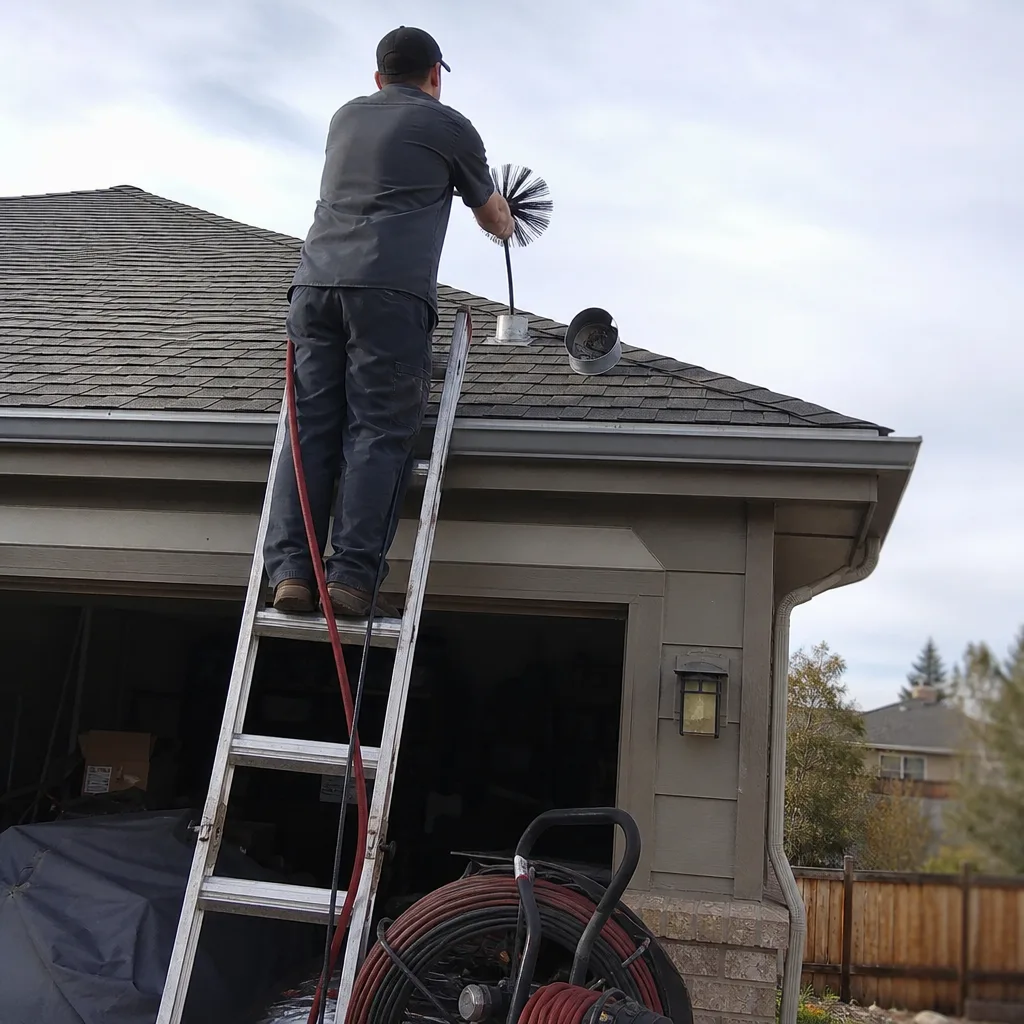
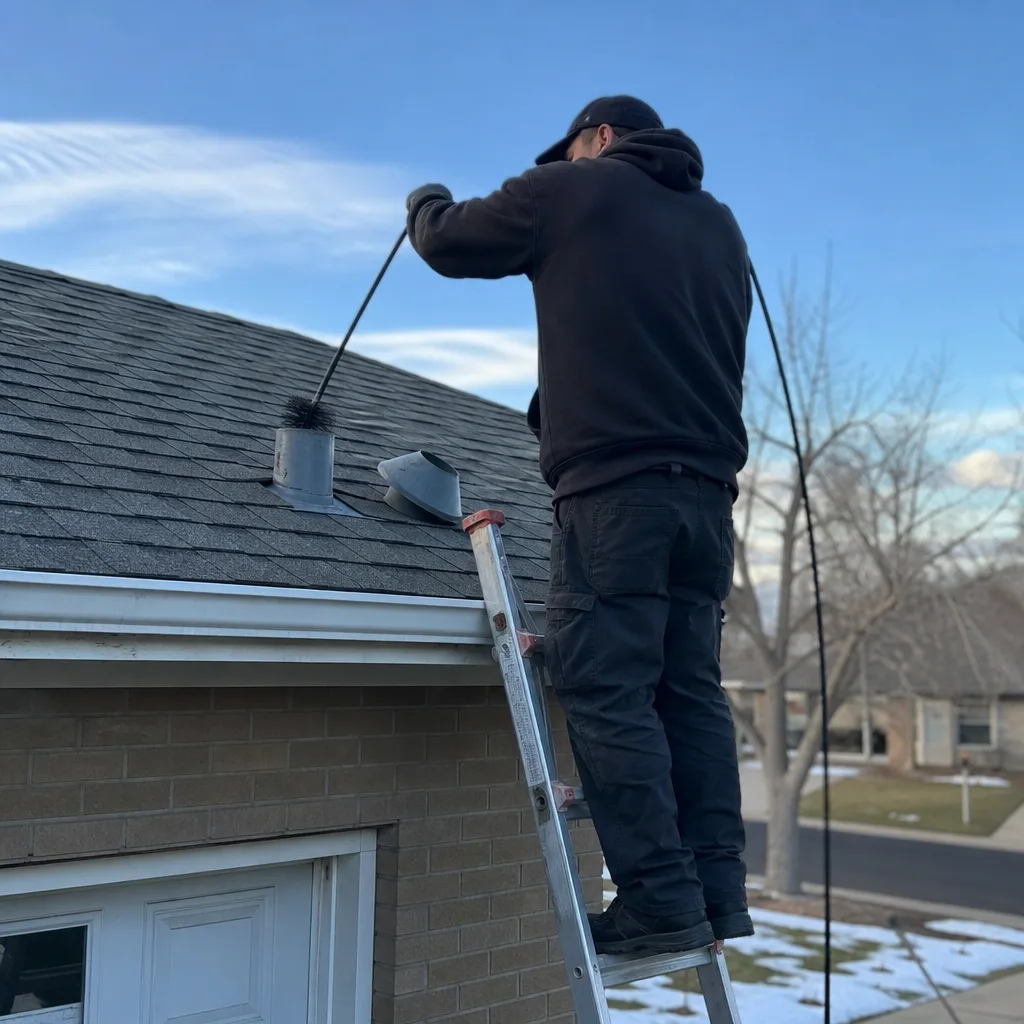
Walk outside to where your dryer vents. The flap should open fully during dryer operation and seal completely when off. Lint accumulation around the exterior hood indicates restricted airflow and fire risk. In Parker’s wind-exposed subdivisions like Pradera and Canterberry, we see exterior flaps damaged by wind gusts that prevent proper closure, letting cold air and pests enter. This check takes two minutes and requires no tools.
These four tasks are the complete list. Anything beyond them - brushing inside duct runs, attempting to reach the plenum, or using compressed air - crosses into professional territory for reasons we’ll explain next.
Why Consumer Tools Fail Inside Duct Runs
The physics of duct cleaning are not intuitive. A household vacuum, even a high-end HEPA shop-vac, generates approximately 100-200 cubic feet per minute (CFM) of airflow at the hose opening. A typical residential duct system in Parker contains 150-300 linear feet of ductwork with multiple branches, elbows, and reductions. The pressure differential created by a shop-vac dissipates within the first few feet of duct length.
More critically, the airflow pattern is wrong. A shop-vac at a register creates suction at that single point. Air rushes in from adjacent branches to fill the vacuum, carrying debris with it. Dust that was settled and static becomes airborne and redistributed. We have photographed the aftermath: homeowners who ran a vacuum hose into their ducts and found more dust on furniture the following day than before they started. The machine moved debris without removing it.
Rotary brush kits sold online for $60-$120 compound the problem. These flexible-shaft brushes attach to a drill and spin inside the duct. Without simultaneous negative-pressure extraction, brushing dislodges debris that then settles elsewhere in the system. In flex-duct - common in Parker homes built after 2005 - aggressive brushing can tear the inner liner or detach connections at elbows. We have repaired dozens of such damage calls, always after a DIY attempt.
The plenum, the central distribution box connected directly to your HVAC unit, is entirely inaccessible without removing sealed panels. It is also where the heaviest accumulation occurs, because all return air passes through it before splitting to branches. No consumer tool reaches it. No consumer should attempt to open it - the sheet-metal edges are sharp, and improper resealing creates air leaks that reduce system efficiency and can draw attic or crawl-space contaminants into conditioned air.
Real Cost Comparison: DIY vs Professional in Parker
Honest cost analysis requires counting equipment, time, and risk. Here is the actual math for a typical 2,400-square-foot Parker home with a single HVAC system.
DIY Thorough Attempt
| HEPA shop-vac (minimum viable for fine particulate) | $180-$250 |
| Flexible rotary brush kit with extension rods | $60-$120 |
| Replacement filters (2-3 per attempt) | $30-$60 |
| Register removal tools, drop cloths, protective gear | $40-$75 |
| Time investment (4-6 hours for first attempt) | Your Saturday |
| Total DIY investment | $310-$505 + labor |
The equipment cost is sunk. You own it whether the job succeeds or fails. The time cost is real - a Saturday spent in crawl spaces and attics, not with family. And the outcome is unverified: no documentation, no proof of completion, no warranty if something goes wrong.
Professional Cleaning in Parker
| Complete system cleaning with negative-pressure extraction | $350-$500 |
| Documented Photo Record of every duct run | Included |
| Written scope and price before work begins | Included |
| 365-Day Done Right Promise | Included |
| Time required from homeowner | None - crew works while you’re at work |
| Total professional investment | $350-$500 |
The price overlap is the point. A thorough DIY attempt costs as much as professional service, delivers inferior results, and carries risk of equipment damage. The professional route includes documentation that protects your HVAC warranty, supports resale disclosure, and establishes baseline condition for any future work.
CleanRun’s Haven Standard Clause 1 requires a written price before any work starts - no exceptions. We put our number next to any competitor’s written estimate with our Free Second Opinion. The price you see is the price you pay, not an opening bid.
Parker Scenarios Where DIY Never Works
Certain conditions make DIY duct cleaning not merely ineffective but actively harmful. We have encountered all of these in Parker homes over twelve years of service.
Post-Renovation Drywall Dust
Home remodeling - common in Parker’s established neighborhoods like Clarke Farms and Cottonwood - generates fine gypsum particulate that penetrates deep into duct runs. This dust is typically 2-5 microns, below the capture threshold of standard shop-vac filters. Without HEPA collection at 99.97% efficiency at 0.3 microns, drywall dust passes through the vacuum and recirculates. Worse, residual moisture from joint compound can activate mold growth if not fully extracted. Professional equipment from Abatement Technologies and Nikro uses HEPA filtration at the collection source, not just the exhaust.
Any Suspected Moisture Event
Parker’s semi-arid climate does not prevent moisture problems. Condensate drain failures, humidifier malfunctions, or roof leaks into attic ducts create conditions for mold growth. If you see staining on registers, smell mustiness, or find standing water in a supply boot during inspection, stop. Disturbing mold colonies without containment spreads spores throughout the home. Professional remediation requires negative-air isolation, antimicrobial treatment, and post-verification testing. This is not a DIY scope.
Fiberglass Duct Liner
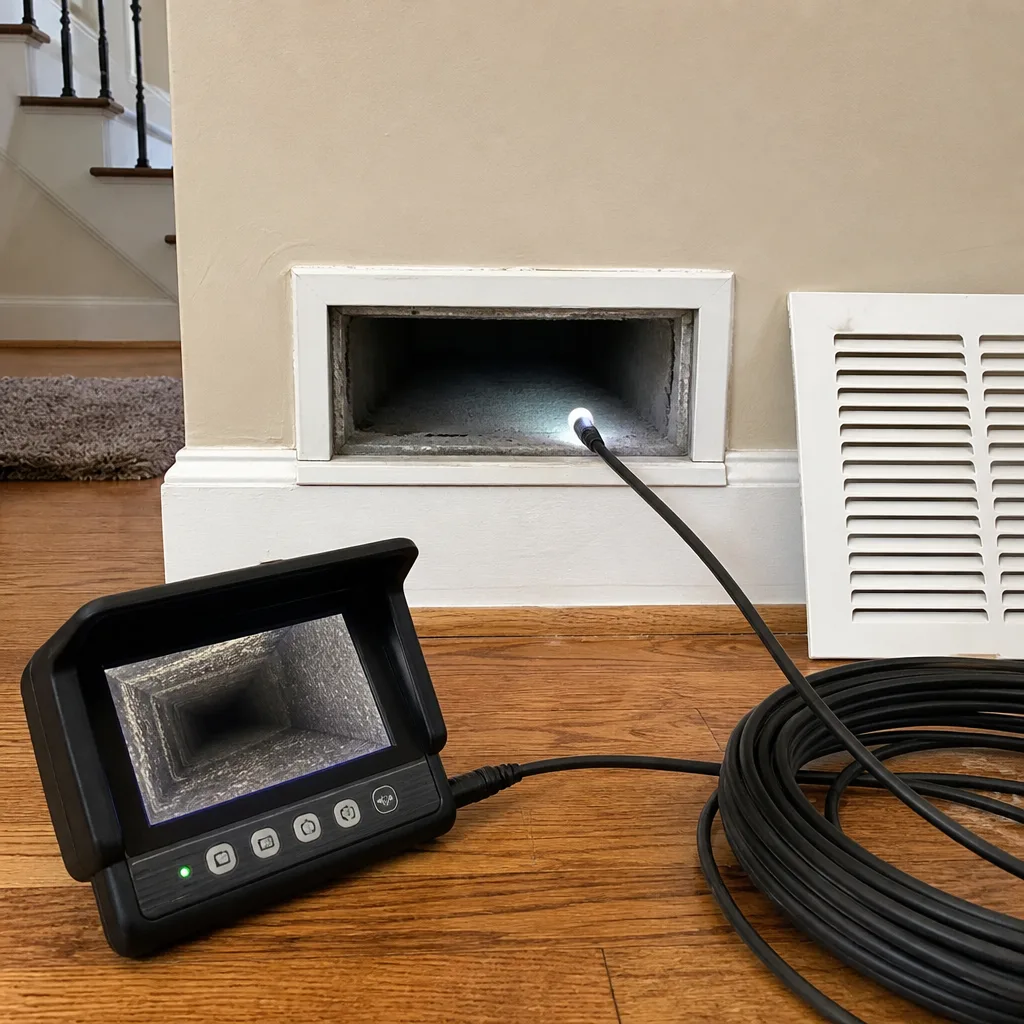
Many Parker homes built 1995-2010 use fiberglass-lined ductwork for acoustic dampening. The liner faces the airstream and traps debris in its porous surface. Brushing or vacuuming releases glass fibers into living spaces - a respiratory hazard. Professional cleaning of lined ducts requires specialized soft-bristle agitation tools and precise pressure control to avoid liner damage. We assess liner condition with borescope cameras before selecting equipment. Homeowners cannot make this determination visually.
Evidence of Pest Intrusion
Droppings, nesting material, or insect casings in a duct boot indicate active or recent pest presence. Disturbing these materials without proper PPE and containment creates health risks. Professional protocols include HEPA containment, antimicrobial treatment, and documentation for insurance or warranty purposes.
System Performance Complaints
If your motivation for duct cleaning is uneven heating, weak airflow, or high energy bills, the ducts may not be the primary problem. Restricted airflow can stem from blower motor issues, refrigerant charge problems, or duct leakage. Cleaning dirty ducts that are also leaking is wasted money. Professional assessment identifies the actual cause before any work begins.
What Professional Equipment Actually Does
Understanding the mechanical difference explains why professional results are not replicable at home. This is not about brand names or marketing claims. It is about airflow physics and system design.
Negative-Pressure Extraction
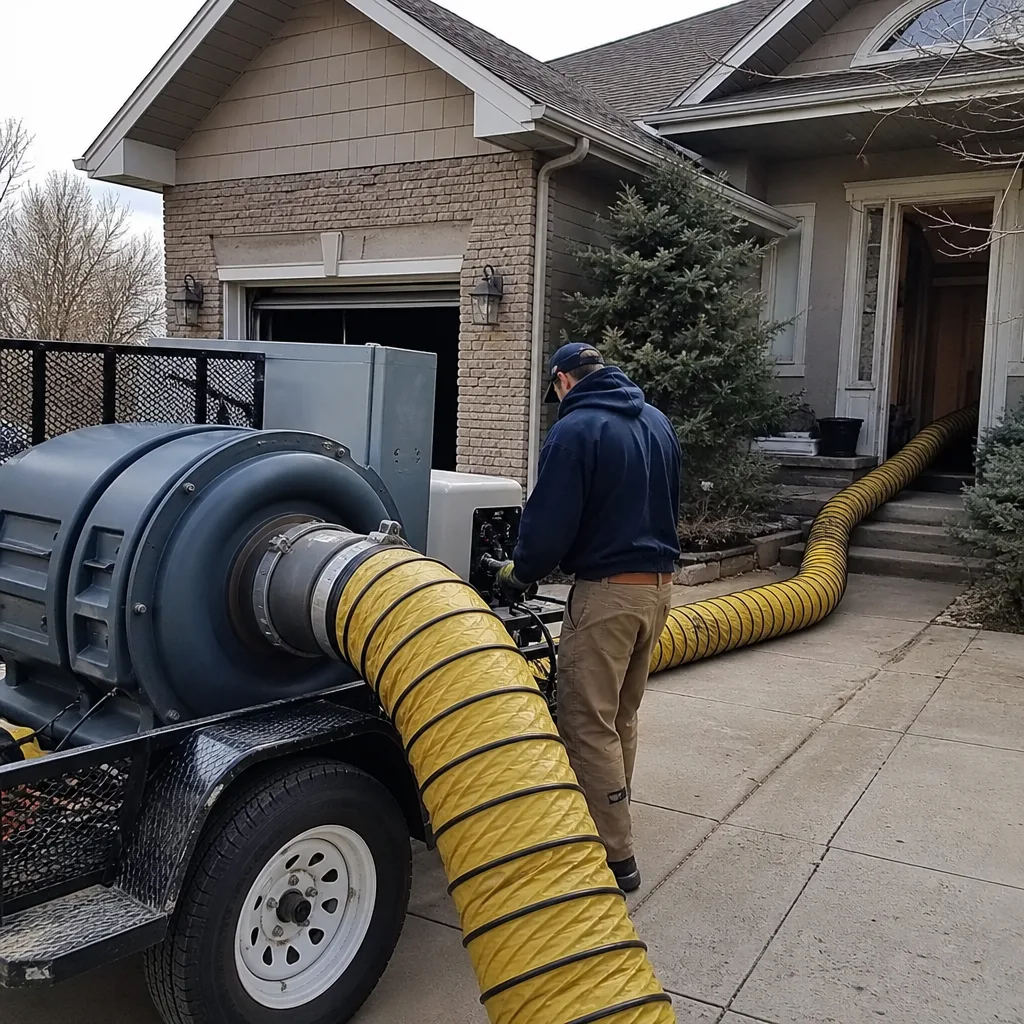
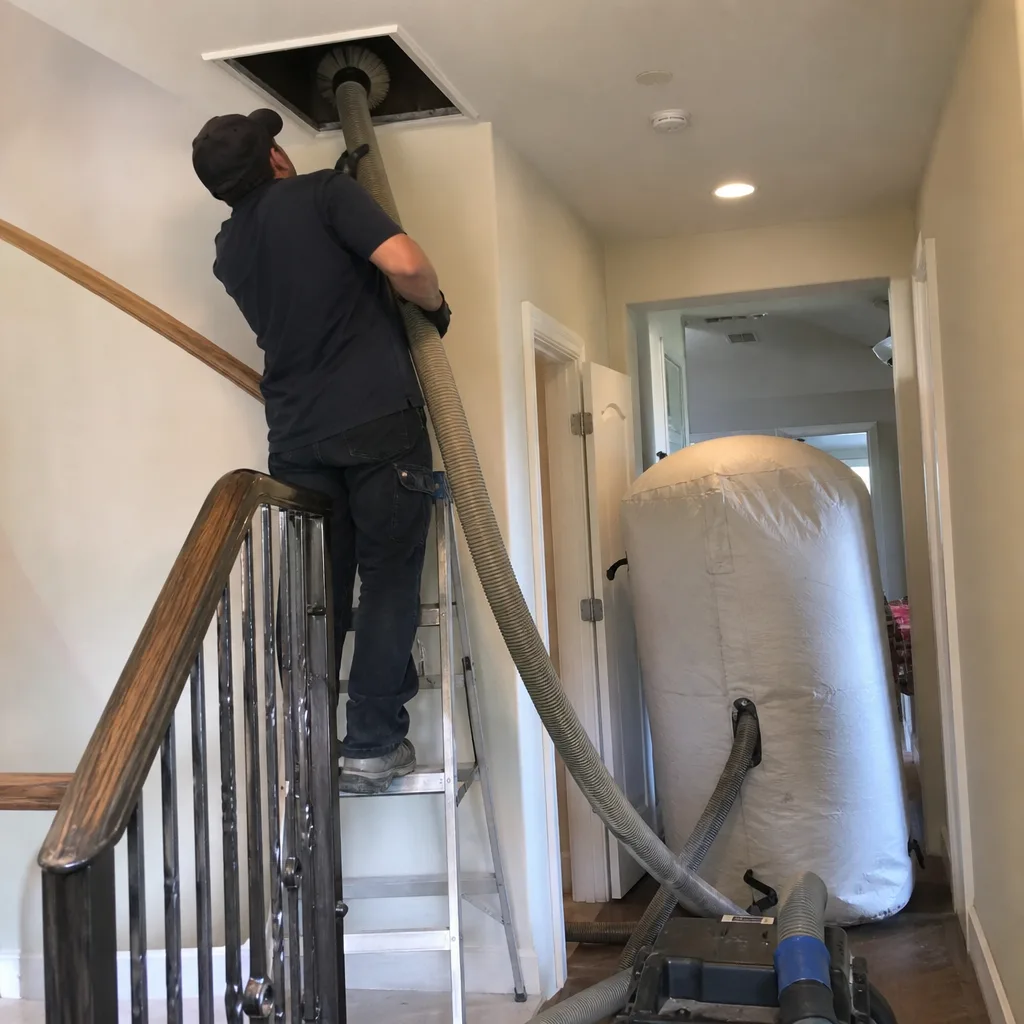
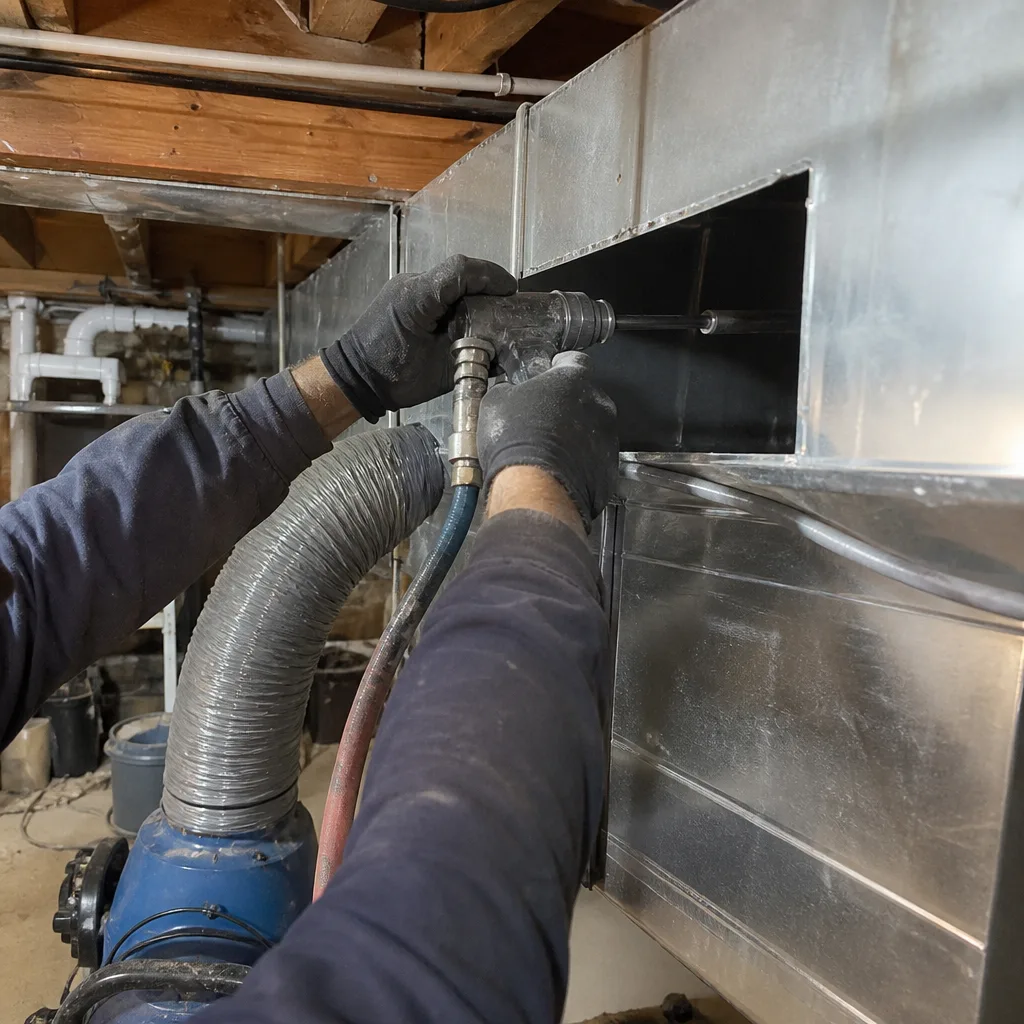
A truck-mounted or trailer-mounted duct cleaning machine generates 2,000-4,000 CFM of airflow at a central collection point. This is connected to your duct system at the plenum or a main trunk line, creating negative pressure throughout the entire network. Every register and return becomes an intake point. Air flows toward the machine, carrying dislodged debris with it.
The critical distinction: a shop-vac pulls at one point and pushes elsewhere. Professional equipment pulls from the system’s center and draws from all points simultaneously. There is no positive-pressure zone forcing debris into rooms.
Agitation Tools
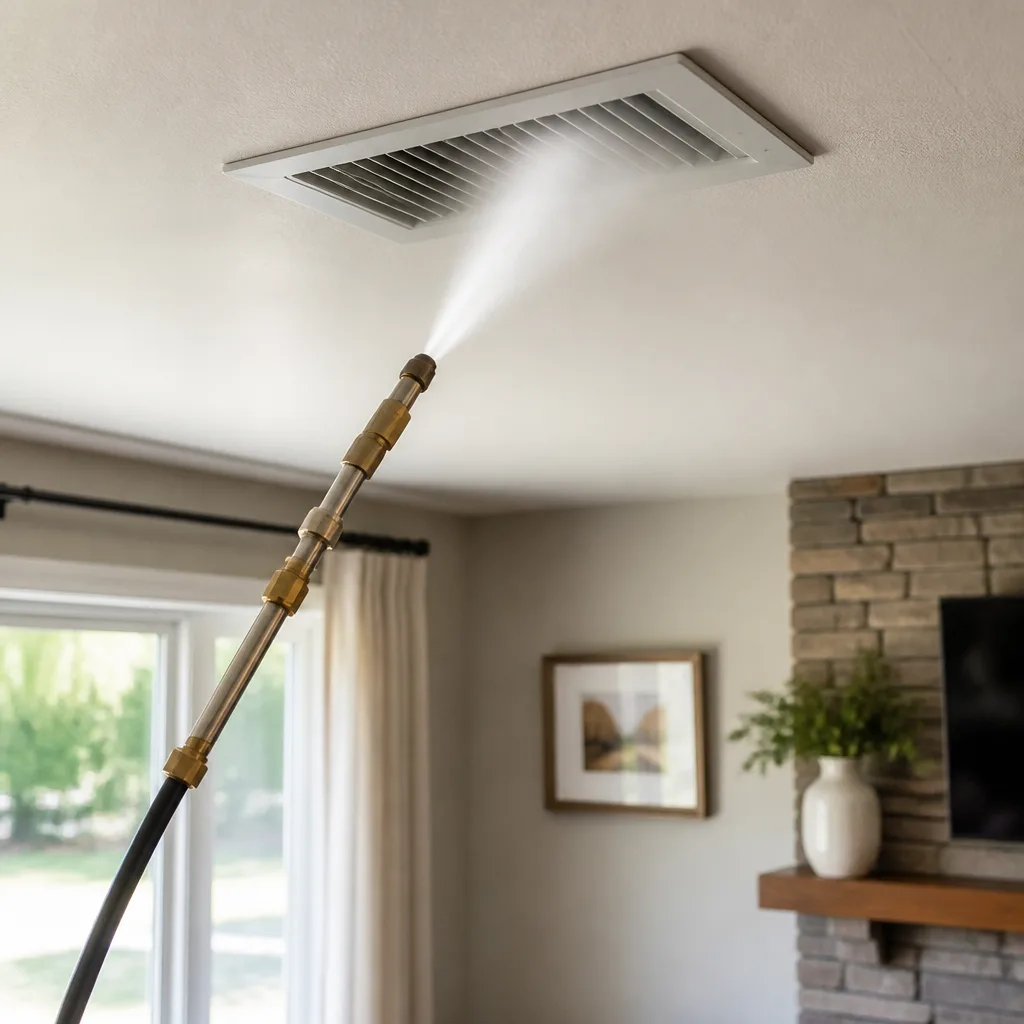
Debris adheres to duct walls through static charge, moisture, and time. Airflow alone does not dislodge it. Professional crews use mechanical agitation - rotating brushes, air whips, or compressed-air tools - that contact duct surfaces while the negative-pressure system is running. Dislodged material is immediately captured. The sequence matters: agitate while extracting, never agitate without extraction running.
CleanRun’s equipment roster includes Rotobrush rotary systems for flex-duct and main trunk lines, Nikro HEPA vacuums for fine particulate collection, and Abatement Technologies negative-air machines for large residential systems. We select equipment based on duct type and contamination level, not convenience.
Access and Containment
Professional cleaning requires temporary access ports in ductwork - sealed after completion - that homeowners should not create. Improper cutting damages structural integrity and creates air leaks. Our crews use calibrated cutting tools and seal ports with code-compliant materials.
Verification
Every CleanRun job concludes with a Documented Photo Record: before-and-after images from inside every duct run, delivered as part of the standard job record. This is not marketing. It is evidence that the work occurred and that it produced measurable change. No DIY method produces equivalent documentation.
Documentation DIY Cannot Produce - And Why It Matters
The absence of documentation is not an abstract concern. It has concrete consequences for Parker homeowners in three specific situations.
Resale Disclosure
Colorado real estate transactions require seller disclosure of known material defects, including HVAC system condition. A documented professional cleaning with dated photos establishes maintenance history and system baseline. “I cleaned them myself last year” carries no evidentiary weight and may raise questions about what was actually done. In Parker’s competitive market, where homes in Reata North or The Pinery often attract multiple offers, documentation reduces buyer hesitation and supports asking price.
HVAC Warranty Claims
Manufacturers including Honeywell and Aprilaire - brands we install and service - increasingly require proof of maintenance for warranty coverage. A failed blower motor or heat exchanger claim may be denied if the homeowner cannot produce records of filter changes and duct cleaning. DIY maintenance without documentation is indistinguishable from no maintenance in a warranty dispute.
Future Contractor Assessment
When any HVAC professional - including CleanRun - assesses a system, we need to know its history. A documented cleaning from 2022 tells us what the ducts looked like then and what has changed since. An undocumented system is an unknown system, which means more diagnostic time and potentially unnecessary work. Documentation saves money on future service calls.
The 365-Day Done Right Promise extends this record forward: if our work is not right, we make it right, backed in writing on every job. This is not a policy subject to manager approval. It is Haven Standard Clause 5, printed on every work order.
Common Mistakes to Avoid
- Using compressed air without extraction. Blowing debris loose with a leaf blower or compressor hose forces contamination into living spaces. We have cleaned up after this mistake in Parker homes more than once - the visible dust layer on furniture is only the portion you can see.
- Brushing flex-duct aggressively. The spiral wire frame and plastic liner of flex-duct tear under rigid brush pressure. Once torn, the duct leaks conditioned air into attics or crawl spaces, increasing energy bills and drawing contaminants inward.
- Ignoring the return side. Homeowners often focus on supply registers (where air blows out) and neglect return grilles and trunk lines (where air is drawn in). The return side is typically dirtier because it lacks filtration before the air handler.
- Cleaning without inspecting first. A borescope inspection - standard in professional service - reveals duct liner condition, pest evidence, or moisture damage that changes the cleaning approach. Skipping inspection risks damage or health exposure.
- Expecting visible results from DIY. If you cannot see inside the duct runs, you cannot verify the outcome. The satisfaction of “doing something” is not the same as documented improvement. Professional before-and-after photos close this verification gap.
- Delaying after visible mold. In Parker’s temperature swings - below 20°F in winter, above 90°F in summer - HVAC systems cycle frequently, spreading spores if mold is present. DIY cleaning spreads contamination; professional containment stops it.
When to Call a Professional
Call a professional when your scope exceeds the four surface tasks listed above, when any moisture or mold is suspected, when your home has fiberglass-lined ducts, or when you need documentation for warranty, resale, or baseline records. Read How to Hire a Air Duct Cleaning Contractor in Parker: A Step-by-Step Guide before you call. The cost difference between thorough DIY and professional service is negligible; the outcome difference is substantial.
CleanRun Air Duct Cleaning Parker offers free estimates in Parker - call (719) 259-4520. Every estimate includes a written price before any work starts, under Haven Standard Clause 1. Our background-checked, uniformed technicians operate under Haven Standard Clause 3: Verified Crews, identified by name before arrival. We have served 52,000+ homes since 2013, every one with a written price and a Documented Photo Record.
Frequently Asked Questions
Complete system cleaning for a typical Parker home ranges from $350 to $500, depending on system size, duct type, and accessibility. This includes negative-pressure extraction of all duct runs, register and grille cleaning, and a Documented Photo Record delivered after completion. CleanRun provides a written price before any work starts - call (719) 259-4520 for an exact quote; estimates are free.
Low quotes typically reflect limited scope - perhaps only supply registers cleaned, or a shop-vac used without negative-pressure extraction. The $79-$129 coupon offers common in metro Denver rarely include trunk lines, plenums, or documentation. Ask what equipment will be used, what areas are included, and whether before-and-after photos are provided. A written scope prevents bait-and-switch.
Demand a Documented Photo Record showing the inside of every duct run before and after work. CleanRun includes this as standard on every job - not as an upgrade. Without photos, you have only the technician’s word. With photos, you have dated, location-stamped evidence of work performed.
Every 3-5 years for typical households; every 2-3 years if you have pets, allergies, or recent renovation. See our Seasonal Air Duct Cleaning Care for Parker: Year-Round Homeowner’s Guide for timing tips. Parker’s dry climate and seasonal cottonwood fluff increase particulate load compared to more humid regions. Filter quality also matters - a MERV 13 filter changed regularly extends cleaning intervals. We assess condition during free estimates and recommend based on what we find, not a calendar.
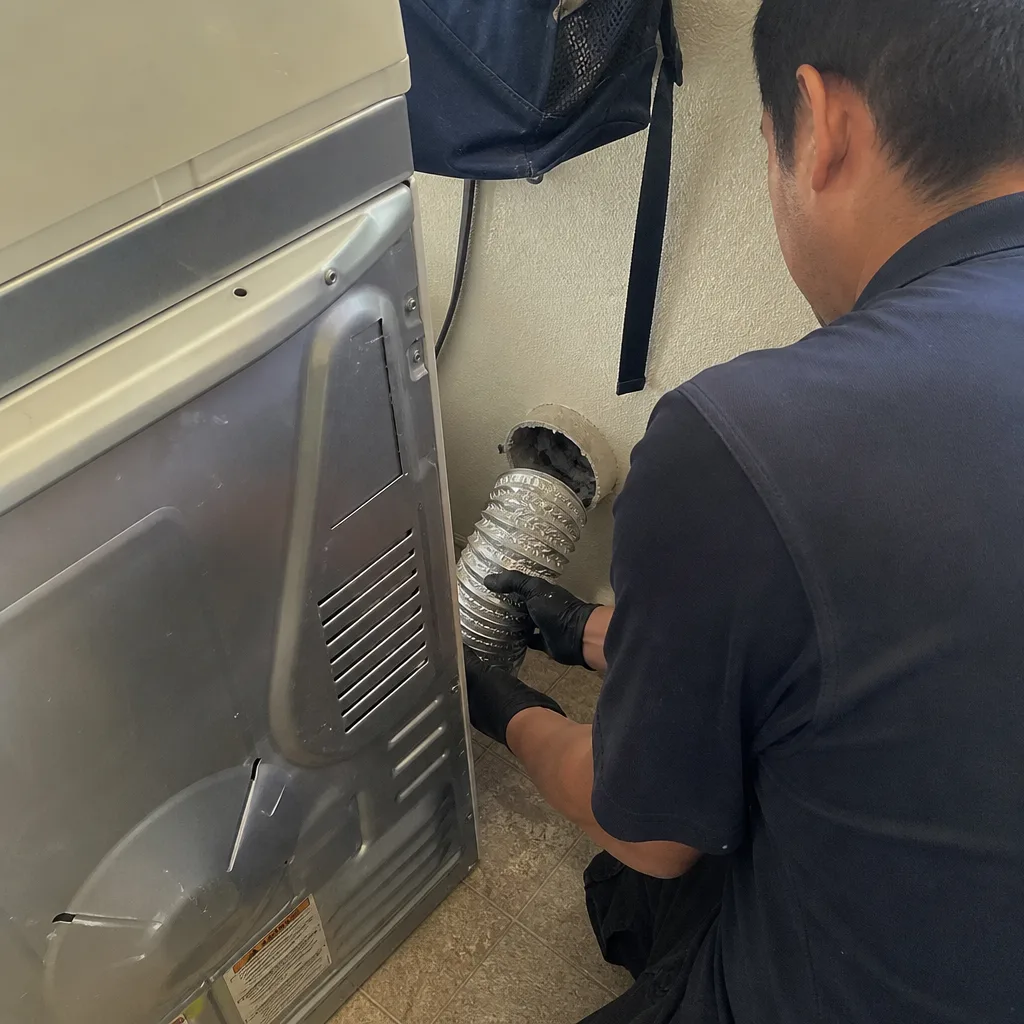
The exterior check and lint trap cleaning are homeowner tasks. The full duct run - especially through attic or crawl space with multiple elbows - requires rotary tools and airflow verification that most homeowners lack. Dryer Vent Cleaning in Parker from CleanRun includes airflow measurement before and after, with documentation. Dryer vent fires peak in winter; don’t guess about adequacy.
Moderately, if ducts were significantly obstructed. The larger efficiency gains come from sealing duct leaks and proper insulation, which HVAC Cleaning in Parker assessment can identify. We photograph and measure before recommending any service. Cleaning dirty ducts that are also leaking is incomplete work - we flag this during inspection and offer repair options with written pricing.
The Bottom Line
DIY air duct cleaning has a legitimate but narrow scope: return grilles, filters, visual inspections, and exterior dryer vent checks. Inside duct runs, the physics defeat consumer equipment. Negative-pressure extraction at professional scale - 2,000-4,000 CFM with simultaneous agitation - is not replicable with shop-vacs or drill attachments. In Parker, where home values and HVAC system complexity both run high, the marginal cost difference between thorough DIY and documented professional service makes the professional route the rational choice for anything beyond surface maintenance. The documentation matters as much as the cleaning: for warranty, resale, and future service history. Know where the line falls, stay on your side of it, and when the scope crosses into the ductwork itself, call a crew that puts the proof in writing and photographs.
Written by Tomas Reyes, Owner at CleanRun Air Duct Cleaning Parker, serving Parker since 2013.